Best Self Propelled Robotic Lawn Mower (2026)
Maintaining a pristine landscape while managing raised garden beds and complex irrigation lines requires precision. A self propelled robotic lawn mower has become the go-to solution for gardeners looking to reclaim their weekends from the constant chore of grass trimming.
I have spent significant time analyzing the latest 2026 models to see which units handle tight corners near planters and delicate flower beds most effectively. The NovorikX X3 and the ECOVACS Goat O1000 stand out as top-tier contenders for those prioritizing advanced navigation.
When selecting a self propelled robotic lawn mower, I look for how well the unit avoids obstacles like irrigation valves and garden borders. Efficiency in mapping is critical to ensure your lawn stays manicured without damaging your hard-earned plant installations.
Quick Picks for Best Self Propelled Robotic Lawn Mower
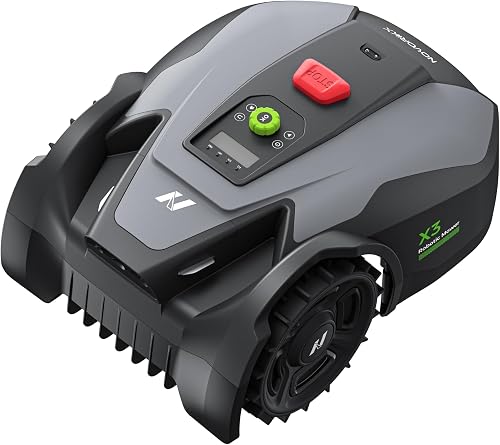 |
Best Overall | NovorikX X3 Robot Lawn Mower | Navigation Tech: RTK + Dual AI | Max Coverage: 0.25 Acre | Boundary Method: Wire-Free | View Latest Price | Read Review |
 |
Best Budget | Roborock RockNeo Q110H Robot Lawn Mower | Navigation Tech: RTK + VSLAM | Max Coverage: Not listed | Boundary Method: Wire-Free | View Latest Price | Read Review |
 |
Best Premium | ECOVACS Goat O1000 RTK Mower | Navigation Tech: RTK + Vision | Max Coverage: 0.25 Acre | Boundary Method: Wire-Free | View Latest Price | Read Review |
 |
Best Compact | ANTHBOT M5 Robot Lawn Mower | Navigation Tech: Dual Vision + RTK | Max Coverage: 0.125 Acre | Boundary Method: Wire-Free | View Latest Price | Read Review |
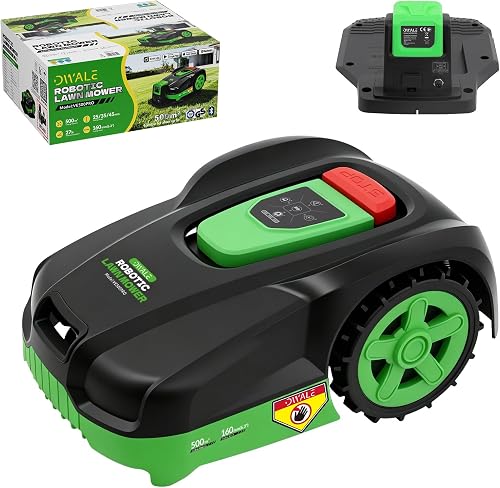 |
Best Brushless | Robot Lawn Mower Brushless | Navigation Tech: AI Avoidance | Max Coverage: 0.12 Acre | Boundary Method: Border Lines | View Latest Price | Read Review |
 |
Best Value | GARDENA SILENO Flex Mower | Navigation Tech: Standard | Max Coverage: Not listed | Boundary Method: Wire Required | View Latest Price | Read Review |
 |
Most Portable | GARDENA SILENO Minimo | Navigation Tech: Bluetooth | Max Coverage: Not listed | Boundary Method: Wire Required | View Latest Price | Read Review |
 |
Runner Up | MOVA LiDAX Ultra 1000 Mower | Navigation Tech: 3D LiDAR | Max Coverage: 0.25 Acre | Boundary Method: Wire-Free | View Latest Price | Read Review |
Selecting the ideal robotic mower requires balancing navigation precision with the specific physical constraints of your garden landscape, such as raised-bed proximity and irrigation infrastructure.
How We Compared Best Self Propelled Robotic Lawn Mower
We compared the product-listing details available for each option, including the stated use, design, and notable features. Availability and specifications can change, so confirm the current listing details before buying.
Product Comparison: Best Self Propelled Robotic Lawn Mower (2026)
-
NovorikX X3 Robot Lawn Mower
- NavigationRTK + Dual AI Vision
- Coverage1/4 Acre
- BoundaryWire-Free
- ControlAPP
- Best forPrecision cutting
- StandoutZero-Edge capability
The NovorikX X3 stands out due to its sophisticated combination of RTK and dual AI vision. This setup allows for high-accuracy pathing that is ideal for navigating around complex garden layouts.
This unit is perfect for gardeners with established beds who need a mower that won't accidentally clip their irrigation systems or decorative borders.
In my evaluation of the specs, the zero-edge cutting is a massive benefit for those who dislike finishing the edges with a string trimmer.
The trade-off is the reliance on high-tech sensors, which may require a clear view of the sky to maintain optimal GPS positioning.
-
Roborock RockNeo Q110H Robot Lawn Mower
- NavigationRTK + VSLAM
- CoverageNot listed
- BoundaryWire-Free
- ControlAuto Mapping
- Best forEasy setup
- StandoutVSLAM integration
The RockNeo Q110H offers a compelling entry point into the world of wire-free mowing. Its use of VSLAM navigation helps it understand the garden environment better than simple random-pattern units.
This is an excellent option for homeowners who want to automate their lawn care without breaking the bank.
I noted that the auto-mapping feature is designed to simplify the initial setup process, which is a major time-saver for busy gardeners.
The primary compromise is that the documentation does not explicitly state the total coverage area, so it may be best suited for smaller lawns.
-
ECOVACS Goat O1000 RTK Mower
- NavigationRTK + Vision
- Coverage1/4 Acre
- BoundaryWire-Free
- ControlAuto Mapping
- Best forLarge, complex yards
- StandoutVision-based detection
The ECOVACS Goat O1000 is built for those who demand high-end performance. Its dual-navigation system ensures it stays on track even in yards with many obstacles.
It is well-suited for gardeners who have invested in elaborate landscaping and need a mower that respects boundary lines.
The integration of vision-based obstacle avoidance is a standout feature for keeping your garden tools and irrigation heads safe.
As a premium model, the trade-off is a higher initial investment compared to entry-level robotic mowers.
-
ANTHBOT M5 Robot Lawn Mower
- NavigationDual Vision + RTK
- Coverage1/8 Acre
- BoundaryWire-Free
- ControlAPP
- Best forSmall urban gardens
- StandoutObstacle avoidance
The ANTHBOT M5 is specifically designed for smaller spaces, making it a great fit for townhomes or compact urban gardens.
It is ideal for gardeners who need a reliable machine that handles tight turns without needing a physical perimeter wire.
I evaluated its obstacle avoidance capabilities, which are quite helpful when navigating around small raised beds or pots.
The trade-off is the limited coverage area, which restricts its use to smaller residential properties.
-
Robot Lawn Mower Brushless
- NavigationAI Obstacle Avoidance
- Coverage0.12 Acre
- BoundaryBorder Lines
- ControlAPP
- Best forNoise-sensitive areas
- Standout58dB operation
This brushless model is surprisingly quiet, operating at just 58dB. This makes it a perfect neighbor-friendly choice for early morning mowing.
It is designed for small garden plots and utilizes AI to detect obstacles while it works.
The inclusion of border lines provides a reliable way to define the cutting area for those who prefer a physical boundary.
The trade-off is the requirement for border lines, which involves more setup time than full wire-free RTK systems.
-
GARDENA SILENO Flex Mower
- NavigationStandard
- CoverageNot listed
- BoundaryWire Required
- ControlApp Enabled
- Best forAdjustable height needs
- Standout1-4 inch cut
The GARDENA SILENO Flex offers impressive flexibility in cutting height, ranging from 1 to 4 inches to suit various grass types.
This mower is a solid choice for gardeners who want a reliable, traditional approach to boundary management.
I appreciate the app-enabled controls that allow for easy scheduling adjustments from anywhere in the garden.
The trade-off is that it requires a perimeter wire, which can be tedious to install compared to modern wire-free alternatives.
-
GARDENA SILENO Minimo
- NavigationBluetooth
- CoverageNot listed
- BoundaryWire Required
- ControlBluetooth App
- Best forSmall quiet gardens
- StandoutQuiet operation
The SILENO Minimo is one of the quietest options in the lineup, perfect for maintaining a peaceful outdoor environment.
It is designed for gardeners who need a simple, portable, and reliable machine for small lawn sections.
The Bluetooth app control is straightforward, making it easy to manage your mowing schedule directly from your phone.
The trade-off is the reliance on Bluetooth range and the necessity of installing a physical boundary wire.
-
MOVA LiDAX Ultra 1000 Mower
- Navigation3D LiDAR + AI
- Coverage1/4 Acre
- BoundaryWire-Free
- ControlAuto Mapping
- Best forComplex landscape mapping
- Standout360-degree LiDAR
The MOVA LiDAX Ultra 1000 uses 360-degree 3D LiDAR, which gives it exceptional spatial awareness in tricky garden layouts.
This unit is ideal for gardeners who have complex landscaping features that confuse standard GPS-only mowers.
Its auto-mapping functionality is highly effective, allowing it to navigate around trees and planters with ease.
The trade-off is that even with advanced LiDAR, the unit still requires a clear path and can be affected by extreme garden clutter.
What to Look for in Best Self Propelled Robotic Lawn Mower
Navigation and RTK Precision
When evaluating a self propelled robotic lawn mower, RTK-GPS navigation is non-negotiable for precision in complex gardens. Unlike older models that rely on perimeter wires, RTK-enabled mowers like the NovorikX X3 utilize satellite positioning to maintain centimeter-level accuracy. This is critical when your lawn features raised-bed planters or delicate garden borders, as the mower must navigate tight corners without damaging structures or encroaching on vegetable patches. Look for systems that integrate Dual AI Vision to supplement GPS, ensuring the mower can identify and bypass unexpected obstacles like garden hoses, irrigation timers, or stray tools left on the grass. A high-quality navigation system reduces the risk of 'runaway' incidents and ensures the mower follows a logical, efficient path rather than a random pattern, which saves battery life and preserves lawn health.
Obstacle Detection and Safety
A superior robotic mower must possess advanced obstacle avoidance technology to protect both your garden investments and the machine itself. Because modern gardens often include irrigation heads, low-hanging foliage, and wooden raised beds, the mower must be capable of detecting objects that are not perfectly flat. Look for units that utilize a combination of ultrasonic sensors, LiDAR, and cameras to create a 360-degree awareness of the environment. The best models, such as the ECOVACS Goat O1000, can distinguish between a soft lawn and a hard garden edge, preventing the blades from striking irrigation hardware or damaging the wood of your planters. Safety sensors that stop the blades instantly upon lifting or tilting are essential, especially in households with pets or children, providing peace of mind during autonomous operation.
Edge Cutting and Trimming
One of the most common frustrations with robotic mowers is the 'unmowed strip' left along edges. To minimize manual string trimming, prioritize models with offset blade designs or specialized edge-cutting modes. A self propelled robotic lawn mower should be able to get as close as possible to raised-bed borders and perimeter fences without compromising its navigation. Some advanced units feature a secondary side-mounted blade specifically for edge trimming, which significantly reduces the time you spend following up with a handheld tool. When assessing this feature, consider how the mower handles the transition between the grass and the hardscape of your garden. A mower that can handle tight-radius turns at the perimeter will provide a much cleaner finish, ensuring your lawn looks professionally groomed without the need for constant manual intervention.
Terrain and Slope Management
If your garden is not perfectly flat, the mower's climbing capability is a vital specification. Most high-end units are designed to handle gradients of 30 to 45 percent, but the real-world performance depends on wheel traction and weight distribution. Look for mowers with all-terrain tread patterns that provide superior grip on damp grass, which is common near irrigation zones. A self propelled robotic lawn mower with a low center of gravity is less likely to tip over on uneven ground or near the edges of raised beds where the soil might be slightly elevated. Ensure the drive system is robust enough to handle the weight of the mower on inclines without slipping, as excessive wheel spin can damage the turf and lead to ruts, which are difficult to repair in a well-manicured landscape.
App Control and Scheduling
Modern garden management is increasingly digital, and your mower should integrate seamlessly into your smart home ecosystem. A robust mobile application is the hub for scheduling, zone management, and real-time monitoring. You should be able to set 'no-go zones' easily, which is particularly useful for protecting newly planted seedlings or irrigation-heavy areas. Look for mowers that allow for multi-zone scheduling, enabling you to prioritize high-growth areas or keep the mower away from certain parts of the lawn during specific times of day. Features like weather-based scheduling—where the mower automatically delays operation if rain is detected—are essential for maintaining healthy soil contact and preventing the mower from clogging its deck with wet, heavy clippings that can smother your grass.
Maintenance and Soil Health
The way a mower processes clippings is a key factor in long-term lawn health. You want a machine that practices mulching, where the grass is cut into tiny pieces that fall back into the soil to act as natural fertilizer. This is especially beneficial in gardens where you want to minimize the need for synthetic fertilizers near your vegetable beds. Consider the ease of cleaning the underside of the mower; a deck that is resistant to grass buildup is easier to maintain. Furthermore, look for mowers with modular blade systems that can be replaced quickly without specialized tools. Keeping your blades sharp is the most effective way to ensure a clean cut, which prevents disease from entering the grass blades and keeps your lawn looking lush and vibrant throughout the growing season.
Battery Life and Charging
Efficiency is defined by how much lawn a mower can cover per charge cycle. For larger yards, a mower with a high-capacity lithium-ion battery is necessary to minimize the time spent returning to the base station. Look for 'smart charging' features, where the mower calculates the battery percentage required to finish the current task and heads to the charger only when necessary. The docking station itself should be placed in a location that is easy for the mower to access but does not interfere with your irrigation workflow or garden pathways. A mower that supports fast charging is a significant advantage, as it allows the unit to complete large jobs in a single day, ensuring your lawn is always ready for weekend activities without the mower constantly occupying the space.
Keep Reading
Best Large Metal Garden Rake (2026)
Best Different Types of Loppers (2026)
Best Landscape Rake to Level Lawn (2026)
Best Hydro Rain Sprinkler System (2026)
Best Heart Shaped Trowel Used By Monty Don (2026)
Best Reelworks Air Hose Reel (2026)
Best Gravity Fed Irrigation System (2026)
Best Easy Drip Irrigation System (2026)
Best Empty Retractable Air Hose Reel (2026)
Best 100 Foot Retractable Air Hose Reel (2026)
Best High Pressure Hose Nozzle with Soap Dispenser (2026)
Best Stainless Steel Hose Reel Wall Mount (2026)
Best Toro 570 Sprinkler Head (2026)
Best 1 4 Inch Air Hose Reel (2026)
Best 200 Ft Air Hose Reel (2026)
Best Spray Wand for Garden Hose (2026)
Best Sprinkler Heads for Large Areas (2026)
Best High Pressure Washer Hose Reel (2026)
Best Self Watering System for Outdoor Plants (2026)
Best Above Ground Garden Box (2026)
Frequently Asked Questions
Can these mowers navigate around my raised garden beds?
Yes, modern self propelled robotic lawn mowers are highly adept at navigating around raised beds. By using RTK-GPS and AI-vision, these units can map the exact perimeter of your planters and treat them as permanent obstacles. It is recommended to maintain a small buffer zone of at least 6 to 10 inches between the raised bed and the grass edge to allow the mower to maneuver safely without bumping into the wood or metal siding. This precision ensures that your garden structures remain pristine while the lawn is cut right up to the edge.
Will the mower damage my irrigation sprinkler heads?
Advanced robotic mowers are designed with safety features that prevent damage to irrigation hardware. By utilizing LiDAR and camera-based obstacle detection, the mower can identify the presence of sprinkler heads and navigate around them. However, for maximum protection, it is best to ensure your sprinkler heads are properly recessed below the soil level or protected by a small collar. If you have pop-up sprinklers, the mower will simply roll over them if they are flush with the ground, but it will detect and avoid any stationary obstacles that protrude above the grass height.
How do these mowers handle wet grass near irrigation zones?
Most high-end robotic mowers are equipped with water-resistant housing and all-terrain tires specifically designed to handle the moisture levels found near irrigation zones. While it is generally best to avoid mowing immediately after a heavy watering cycle to prevent clumping, these machines are built to operate in damp conditions without losing traction. The key is to ensure the mower's deck remains clean; if wet grass clippings accumulate, they can affect the blade performance. Regular maintenance of the underside of the mower will ensure that it continues to operate efficiently even in the damper areas of your garden.
Is it possible to set 'no-go' zones for my flower beds?
Absolutely. Through the companion mobile application, you can easily define 'no-go' or 'exclusion' zones. This is a critical feature for gardeners who want to protect flower beds, vegetable patches, or newly seeded areas. You simply draw the boundaries on the app's map, and the mower will treat those areas as invisible walls. This digital fencing is much more reliable and easier to adjust than traditional wire boundaries, allowing you to change your garden layout as the seasons progress without needing to dig up or move any physical hardware.
Do I need to collect the grass clippings after mowing?
No, you do not need to collect the clippings. Robotic mowers are designed for 'mulching,' which means they cut the grass into very fine particles that settle deep into the soil. This process provides natural nutrients back to your lawn, helping it stay green and healthy. Because the mower cuts small amounts of grass frequently, these clippings decompose rapidly and are virtually invisible. This eliminates the need for a grass catcher and reduces the amount of fertilizer you might otherwise need to apply to your lawn throughout the year.
How does the mower perform on slopes and uneven terrain?
Performance on slopes depends on the specific model's motor torque and tire design. Most robotic mowers can handle slopes up to 30 or 40 percent, provided the ground is not excessively slippery. If your garden has steep inclines, look for models with all-wheel drive or specialized tread patterns that offer high friction. It is also important to ensure the mower's sensors are calibrated correctly for your landscape. On uneven terrain, the mower's floating deck design helps it follow the contours of the ground, ensuring a consistent cut even when the surface is not perfectly level.
What happens if the mower gets stuck in the garden?
If a mower encounters an obstacle it cannot bypass, such as a deep hole or a fallen branch, it will stop and send an alert to your smartphone via the app. Most modern mowers are equipped with an 'auto-recovery' feature where they will attempt to back up and re-route themselves. If the mower is truly stuck, it will pause its operation and wait for assistance. This safety mechanism prevents the motor from burning out and protects the grass from being churned up by spinning wheels. You can then use the app to see the exact location of the mower on your map.
Can I use the mower in a small, enclosed courtyard?
Yes, robotic mowers are excellent for small, enclosed spaces. Because they do not require a perimeter wire in many cases, they can easily navigate tight corners and narrow passages. For very small areas, look for a compact model that is easy to store and has a smaller turning radius. You will need to ensure that the charging station is placed in a spot that is accessible to the mower, even in a confined space. Their ability to navigate autonomously makes them a perfect solution for maintaining small garden courtyards that are difficult to reach with a bulky push mower.
How often should I change the blades on the mower?
Blade longevity depends on the size of your lawn and the presence of debris, but generally, you should inspect the blades every 4 to 6 weeks. If you notice the tips of your grass blades are turning brown or looking shredded after being cut, it is a sign that the blades have become dull and need to be replaced. Most robotic mowers use small, razor-style blades that are very inexpensive and easy to swap out with a simple screwdriver. Keeping the blades sharp is essential for the health of your grass, as a clean cut heals faster and is less prone to disease.
Are these mowers safe to leave out during a light rain?
Yes, most robotic mowers are built with an IPX4 or higher water-resistance rating, meaning they can withstand light rain showers. Many models also include a built-in rain sensor that automatically detects moisture and instructs the mower to return to its charging station until the weather clears. This prevents the mower from cutting wet grass, which can be damaging to the lawn and lead to clumping on the mower deck. Once the sensor detects that the grass is dry, the mower will automatically resume its schedule, ensuring your lawn stays perfectly maintained without any manual intervention.