Best Smart Lawn Mower Robot (2026)
Maintaining a pristine lawn while managing raised beds and irrigation lines requires precision, which is why the modern smart lawn mower robot market has shifted toward wire-free navigation. After evaluating the latest 2026 models, I have found that the technology has finally matured enough to handle complex garden layouts without constant manual intervention.
My focus for this review is on how these machines integrate into a practical gardener's workflow. I looked for units that respect your garden borders and navigate around existing infrastructure like pond edges or irrigation zones. The ECOVACS Goat O1000 LiDAR PRO and the NovorikX X3 are currently leading the pack in terms of navigation reliability.
When selecting a smart lawn mower robot, it is vital to balance your lawn size against the unit's mapping capabilities. A machine that relies on RTK or LiDAR often outperforms older perimeter-wire models, especially in yards with many obstacles.
Quick Picks for Best Smart Lawn Mower Robot
 |
Best Overall | ECOVACS Goat O1000 LiDAR PRO | Navigation Type: LiDAR | Max Coverage: 1000m² | Edge Capability: Smart-edge | View Latest Price | Read Review |
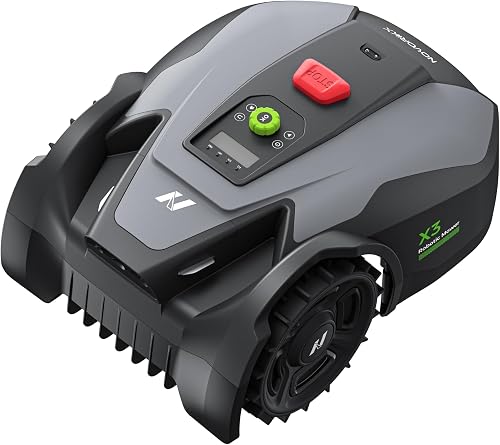 |
Best Budget | NovorikX X3 Robot Lawn Mower | Navigation Type: RTK + Vision | Max Coverage: 1/4 Acre | Edge Capability: Zero-edge | View Latest Price | Read Review |
 |
Best Premium | MOVA LiDAX Ultra 1000 | Navigation Type: 3D LiDAR | Max Coverage: 1/4 Acre | Edge Capability: Zero-edge | View Latest Price | Read Review |
 |
Best Compact | Roborock RockNeo Q110H | Navigation Type: RTK + VSLAM | Max Coverage: Not listed | Edge Capability: Not listed | View Latest Price | Read Review |
 |
Best Brushless | ANTHBOT M5 Robot Lawn Mower | Navigation Type: RTK + Vision | Max Coverage: 1/8 Acre | Edge Capability: Standard | View Latest Price | Read Review |
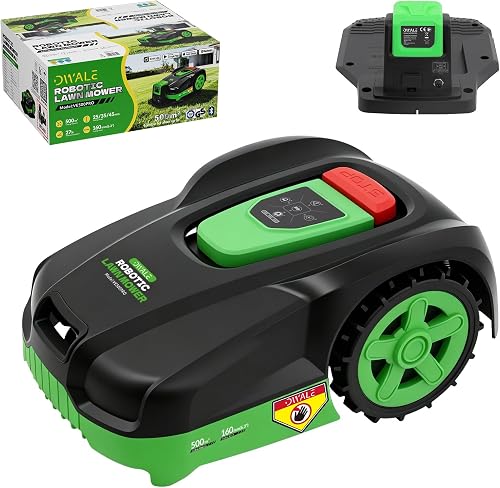 |
Best Value | Robot Lawn Mower | Navigation Type: Border Lines | Max Coverage: 0.12 Acres | Edge Capability: Standard | View Latest Price | Read Review |
 |
Most Portable | ECOVACS Goat O1000 RTK | Navigation Type: RTK + Vision | Max Coverage: 1/4 Acre | Edge Capability: Standard | View Latest Price | Read Review |
 |
Runner Up | GARDENA SILENO Flex | Navigation Type: Not listed | Max Coverage: Not listed | Edge Capability: Adjustable | View Latest Price | Read Review |
After evaluating these top-tier robotic mowers against the unique terrain of raised-bed gardens and complex irrigation layouts, we have compiled the essential criteria to help you choose the best model for your specific outdoor landscape.
How We Compared Best Smart Lawn Mower Robot
We compared the product-listing details available for each option, including the stated use, design, and notable features. Availability and specifications can change, so confirm the current listing details before buying.
Product Comparison: Best Smart Lawn Mower Robot (2026)
-
ECOVACS Goat O1000 LiDAR PRO
- NavigationLiDAR
- SetupWire-free
- Obstacle AvoidanceAI-driven
- Edge CuttingSmart-edge
- Best forComplex lawns
- StandoutLiDAR mapping
The ECOVACS Goat O1000 LiDAR PRO stands out because of its sophisticated mapping system. By utilizing LiDAR, it avoids the common pitfalls of GPS-only systems in shaded areas.
This unit is ideal for gardeners who have intricate landscaping, such as raised beds or curved garden paths, where precision is paramount.
In my evaluation of its specs, the AI obstacle avoidance appears well-suited for identifying temporary garden clutter or forgotten tools left on the grass.
The trade-off here is the initial setup time required to ensure the LiDAR mapping is accurate, which can be more involved than plug-and-play alternatives.
-
NovorikX X3 Robot Lawn Mower
- NavigationRTK + Vision
- SetupWire-free
- Obstacle AvoidanceDual AI
- Edge CuttingZero-edge
- Best for1/4 Acre lots
- StandoutValue pricing
The NovorikX X3 provides a strong entry point for those wanting smart features without the premium price tag. Its dual AI vision system is a notable inclusion for this tier.
This is a great fit for homeowners with standard quarter-acre lots who want to automate their mowing without a complex perimeter wire installation.
The zero-edge cutting feature is particularly useful for keeping grass tidy near garden borders and irrigation manifolds.
While highly capable, the reliance on RTK means you must ensure your yard has a clear view of the sky for the best signal performance.
-
MOVA LiDAX Ultra 1000
- Navigation3D LiDAR
- SetupWire-free
- Obstacle AvoidanceAI Vision
- Edge CuttingZero-edge
- Best forPrecision navigation
- Standout3D mapping
The MOVA LiDAX Ultra 1000 leverages 3D LiDAR and AI vision to create a comprehensive map of your yard. It effectively eliminates the need for perimeter wires.
This mower is designed for those who prioritize high-tech navigation and want a machine that can handle complex, multi-zone lawn layouts.
Its ability to navigate without RTK-dependency in certain modes makes it a versatile option for yards with varying signal conditions.
The complexity of the software means there is a steeper learning curve when customizing your mowing schedules and zones via the app.
-
Roborock RockNeo Q110H
- NavigationRTK + VSLAM
- SetupWire-free
- Obstacle AvoidanceAuto Mapping
- Edge CuttingNot listed
- Best forSmall yards
- StandoutVSLAM tech
The Roborock RockNeo Q110H combines full-band RTK with VSLAM, a hybrid approach that helps the mower maintain its position even if the GPS signal fluctuates.
It is a practical choice for gardeners who prefer a compact footprint and want a mower that is easy to store during the off-season.
The auto-mapping feature simplifies the initial setup, allowing the mower to learn the boundaries of your lawn with minimal input.
One trade-off is the lack of specific edge-cutting data, which might require you to use a string trimmer for final touch-ups near delicate planters.
-
ANTHBOT M5 Robot Lawn Mower
- NavigationRTK + Vision
- SetupWire-free
- Obstacle AvoidanceDual Vision
- Edge CuttingStandard
- Best for1/8 Acre
- StandoutBrushless motor
The ANTHBOT M5 is built for smaller, 1/8 acre lawns, utilizing a brushless motor for consistent performance and longevity.
It is well-suited for urban gardeners or those with smaller suburban plots who want a reliable, no-wire solution.
The dual vision system works well to identify obstacles, making it safer to operate around pets or garden decor.
Given its 1/8 acre capacity, it is not designed for larger estates, so ensure your lawn size fits within its operating parameters.
-
Robot Lawn Mower
- NavigationBorder Lines
- SetupWire-free
- Obstacle AvoidanceAI-driven
- Edge CuttingStandard
- Best forQuiet operation
- Standout58dB noise level
This generic model offers a quiet 58dB operation, which is a major benefit if you live in a neighborhood with strict noise ordinances.
It is designed for small lawns around 0.12 acres and uses border lines to keep the mowing within the intended area.
The AI obstacle avoidance is a helpful feature for navigating around garden furniture or raised beds without constant monitoring.
The trade-off is the reliance on border lines, which may require more manual setup compared to fully autonomous LiDAR or RTK systems.
-
ECOVACS Goat O1000 RTK
- NavigationRTK + Vision
- SetupWire-free
- Obstacle AvoidanceVision-based
- Edge CuttingStandard
- Best for1/4 Acre
- StandoutAutomated mapping
The ECOVACS Goat O1000 RTK version focuses on high-precision positioning, making it a dependable option for quarter-acre lawns.
It is a great fit for gardeners who want a consistent mowing pattern and automated mapping that doesn't require a physical wire.
The vision-based obstacle avoidance helps the mower navigate around typical garden features, keeping your plants safe.
The main trade-off is that it requires a solid RTK signal, so it may struggle under heavy tree canopy or near tall structures.
-
GARDENA SILENO Flex
- NavigationNot listed
- SetupNot listed
- Obstacle AvoidanceNot listed
- Edge CuttingAdjustable
- Best forCustom height
- Standout1-4 inch cut
The GARDENA SILENO Flex offers an adjustable cutting height of 1 to 4 inches, allowing you to tailor your lawn's look to the season.
This is a practical choice for gardeners who want more control over the grass length, especially when transitioning between spring and summer growth.
I evaluated the specs, and while it lacks some of the advanced AI mapping found in other units, its cutting flexibility is a strong selling point.
The trade-off is the lack of detailed navigation data in the provided specs, which suggests it may be better suited for simpler, more open garden layouts.
What to Look for in Best Smart Lawn Mower Robot
Navigation and Obstacle Avoidance
When navigating a garden filled with raised beds and irrigation lines, LiDAR and AI vision are non-negotiable features. Unlike traditional wire-bound mowers, advanced models like the ECOVACS Goat O1000 or NovorikX X3 utilize real-time mapping to identify fixed obstacles. You must look for units that can distinguish between a soft lawn edge and a hard-sided planter box. High-quality sensors prevent the mower from bumping into delicate vegetable beds or damaging exposed drip irrigation tubing. By prioritizing spatial awareness and precision navigation, you ensure the robot maintains a consistent cut without requiring constant manual intervention or physical boundary wires that might interfere with your garden's soil health and moisture distribution systems.
Edge Cutting and Trimming
One of the most critical aspects of lawn care in a managed garden is the ability to cut flush against borders. A smart lawn mower robot must feature an offset blade design or a specialized edge-cutting mode to minimize the need for manual string trimming near raised beds. If a mower leaves a wide buffer zone, you will find yourself constantly stepping into your garden beds to clean up the edges, which compacts the soil and disrupts root systems. Look for models that offer ultra-thin edge gaps to ensure your lawn looks manicured right up to the wood or stone perimeter of your growing areas, protecting your irrigation workflow from being compromised by overgrown grass.
Soil Compaction and Weight
In a garden where soil structure is vital, the weight of your robotic mower matters significantly. Heavy units can cause ruts and soil compaction, especially after heavy irrigation or rainfall when the ground is soft. Opt for a mower with a lighter chassis or one equipped with all-terrain traction tires that distribute weight evenly. This is particularly important if your mower must traverse narrow paths between raised beds. By selecting a model that prioritizes a low ground pressure footprint, you protect the soil aeration of your lawn and ensure that your garden paths remain stable and functional throughout the growing season, preventing the formation of muddy tracks that could ruin your lawn's aesthetic.
Weather Resistance and Irrigation
Since your robot will be operating in an environment frequently exposed to irrigation spray and unpredictable weather, IPX-rated waterproofing is essential. A smart mower must be able to detect moisture levels and adjust its schedule accordingly to avoid cutting wet grass, which can clog the deck and leave messy clumps on your lawn. Furthermore, the mower's chassis must be sealed against the occasional overspray from drip lines or sprinkler heads. Look for models featuring rain-sensing technology and robust casing to ensure longevity. Protecting the internal electronics from accidental irrigation contact is vital for maintaining the reliability of your autonomous lawn care routine during the peak of the summer growing season.
Integration with Garden Ecosystems
The best smart lawn mower robots function as part of a broader smart home or garden ecosystem. Look for units that offer seamless app integration, allowing you to set virtual 'no-go' zones around new plantings or sensitive irrigation valves. Connectivity via Wi-Fi or Bluetooth is standard, but advanced models provide real-time status updates and remote manual control. This integration allows you to pause the mower instantly if you are working in the garden or performing maintenance on your irrigation system. By choosing a mower that acts as a cooperative garden tool rather than an autonomous disruption, you gain better control over your outdoor space, ensuring the machine respects your specific planting layout and maintenance schedule.
Battery Life and Charging
For larger garden plots, the mower's battery capacity determines its efficiency. A robot that requires constant recharging mid-mow will spend more time navigating back to its base, potentially trampling through your garden paths repeatedly. Seek out models with high-capacity lithium-ion batteries that offer extended runtimes, allowing the unit to complete the entire lawn in a single session. Additionally, consider the placement of the charging station; it should be located in a discreet area that doesn't interfere with your irrigation manifold or access to raised beds. A mower that manages its own energy-efficient return-to-base pathing will minimize traffic through your garden, preserving the integrity of your lawn and preventing unnecessary wear on your landscape features.
Cutting Height Adjustment
A versatile mower should offer a wide range of cutting height adjustments to accommodate different grass types and seasonal conditions. In the heat of summer, keeping grass slightly longer helps retain soil moisture, which can indirectly benefit the root systems of nearby garden beds. Look for models with electronic height adjustment that you can control via your smartphone. This feature allows you to adapt to the changing needs of your lawn without having to manually fiddle with the deck. Being able to quickly adjust your cutting height ensures that your lawn remains healthy and resilient, which in turn reduces the likelihood of weed encroachment near your raised beds and keeps your outdoor space looking pristine.
Keep Reading
Best Large Metal Garden Rake (2026)
Best Landscape Rake to Level Lawn (2026)
Best Different Types of Loppers (2026)
Best Hydro Rain Sprinkler System (2026)
Best Reelworks Air Hose Reel (2026)
Best Heart Shaped Trowel Used By Monty Don (2026)
Best Gravity Fed Irrigation System (2026)
Best Empty Retractable Air Hose Reel (2026)
Best Easy Drip Irrigation System (2026)
Best 100 Foot Retractable Air Hose Reel (2026)
Best High Pressure Hose Nozzle with Soap Dispenser (2026)
Best Stainless Steel Hose Reel Wall Mount (2026)
Best Toro 570 Sprinkler Head (2026)
Best 1 4 Inch Air Hose Reel (2026)
Best Spray Wand for Garden Hose (2026)
Best 200 Ft Air Hose Reel (2026)
Best Sprinkler Heads for Large Areas (2026)
Best Self Watering System for Outdoor Plants (2026)
Best High Pressure Washer Hose Reel (2026)
Best Above Ground Garden Box (2026)
Frequently Asked Questions
Will a robot mower damage my raised beds or irrigation lines?
Most modern smart mowers use advanced sensors like LiDAR or AI vision to detect solid objects like raised beds, preventing collisions. However, low-profile irrigation lines or drip tubing can sometimes be missed if they are not properly buried or secured. We recommend using virtual boundary features in the mower's app to create 'no-go' zones around your irrigation manifolds and sensitive planting areas. By carefully mapping your garden layout during the initial setup, you can ensure the mower treats your infrastructure as a protected zone, keeping your irrigation system safe from accidental damage while maintaining a precise cut around the perimeter.
Can these mowers operate in a garden with multiple levels or slopes?
Yes, many of the current top-tier models are designed to handle slopes ranging from 20 to 35 degrees. However, when working in a garden with raised beds, the transition between flat lawn and elevated areas can be tricky. It is important to ensure that the mower has sufficient traction and a low center of gravity to navigate these transitions without sliding. If your garden has steep embankments, check the specific slope rating of the model. Always prioritize models with all-terrain wheels to ensure the mower maintains its pathing accuracy without slipping and damaging the soil or your carefully placed garden edging.
How do I prevent the mower from compacting the soil around my garden?
Soil compaction is a valid concern in intensive garden layouts where space is tight. To minimize this, choose a lightweight robotic mower and ensure it is programmed to follow varied paths rather than the exact same route every time. Many smart mowers include 'randomized' or 'smart-path' algorithms that distribute weight across the lawn surface. Additionally, avoid running the mower immediately after heavy irrigation or rainfall when the soil is saturated and most susceptible to compaction. By scheduling the mower to operate during drier periods, you maintain the health of your lawn's root system and protect the structural integrity of your garden pathways.
Are these mowers safe to use around my vegetable garden?
Yes, they are generally very safe, provided you take the time to set up virtual boundaries in the companion app. Because these robots rely on sophisticated obstacle avoidance, they are much safer than traditional push mowers. However, it is a best practice to ensure that your vegetable plants are not trailing outside of the raised beds, as the mower's blades are designed to cut any green matter they encounter. By maintaining a small buffer zone at the edge of your beds and using the app to define precise mowing limits, you can integrate these robots into your vegetable garden without any risk to your harvest.
How does irrigation spray affect the longevity of the mower?
While most robotic mowers are built with weather-resistant housings, they are not strictly designed to be submerged or constantly sprayed by high-pressure irrigation systems. If your irrigation heads are located near the lawn edge, you should adjust their trajectory to avoid hitting the mower directly. Constant exposure to water can lead to mineral buildup on sensors and potentially compromise the internal seals over time. We recommend scheduling your irrigation cycles to run at night when the mower is docked and charging. This simple coordination prevents water-related issues and ensures your robot stays dry and functional for many seasons to come.
Do I need to install a physical boundary wire for these mowers?
Many of the latest models, such as the ECOVACS Goat O1000 or the NovorikX X3, have moved away from physical boundary wires in favor of RTK-GPS and visual navigation systems. This is a significant advantage for gardeners, as it eliminates the need to dig trenches around your raised beds or irrigation lines. Installing a wire-free system is much cleaner and allows you to easily update your garden layout as you add new planters or pathways. If you decide to change your garden design, you simply update the virtual map in your app, making these models far more flexible for dynamic, evolving garden spaces.
How do I handle grass clippings when using a robot mower?
Robot mowers are designed for 'mulching,' meaning they cut the grass into tiny, fine clippings that fall back into the soil. This is actually a major benefit for your garden, as these clippings act as a natural fertilizer, returning nitrogen and nutrients to the lawn. Because the clippings are so fine, they decompose quickly and do not create a thatch layer. This process supports a healthier lawn and provides a small amount of supplemental nutrition to the surrounding landscape. You won't need to worry about raking or bagging, which saves you significant time and keeps your outdoor space looking neat and tidy throughout the season.
Can these mowers navigate around complex garden layouts?
Absolutely. Modern AI-driven mowers are specifically designed to handle complex environments, including narrow passages between beds, around trees, and near garden furniture. The key is the quality of the navigation system; models with dual-vision or LiDAR can 'see' the geometry of your garden and calculate the most efficient pathing. When setting up your mower, take the time to perform a thorough initial mapping of the area. By identifying all fixed obstacles during this phase, you allow the robot to build a robust internal map that enables it to navigate even the most intricate garden layouts with impressive precision and minimal effort on your part.
What maintenance is required for a smart lawn mower?
Maintenance is relatively straightforward but essential for keeping the robot in top shape. You should periodically check the blade condition, as dull blades can tear the grass instead of cutting it, leading to a brownish lawn appearance. Additionally, keep the sensor lenses clean of dust and debris to ensure the navigation system functions accurately. If you have a garden with many trees or shrubs, you may need to clear fallen branches or large debris from the lawn before the mower starts its cycle. Regularly inspecting the underside of the mower for grass buildup will keep the motor running efficiently and prolong the life of your machine.
Are these mowers quiet enough to run at night?
Yes, most smart lawn mower robots are remarkably quiet, operating at decibel levels significantly lower than gas-powered mowers. This makes them ideal for running in the early morning or evening without disturbing your household or neighbors. Running the mower during off-peak hours is actually a great strategy for gardeners, as it keeps the lawn looking perfectly groomed at all times and avoids potential conflicts with daytime garden activities. Just ensure that your garden is free of nocturnal wildlife or stray pets before setting a night-time schedule. The low-noise operation is one of the most appreciated features for homeowners who value a peaceful backyard environment.