Best Robotic Lawn Mower for Uneven Ground (2026)
Maintaining a lush lawn when your landscape is anything but flat is a common headache for home gardeners. Finding the best robotic lawn mower for uneven ground requires looking beyond standard specs to see how these machines handle inclines and inconsistent terrain.
I have evaluated the current market offerings to help you navigate the transition from manual push-mowing to automated care. Models like the NovorikX X3 and the Segway Navimow i105N stand out for their advanced navigation, which is critical when your yard features dips, slopes, and obstacles.
When selecting a unit, consider the specific navigation technology employed, such as RTK or LiDAR, as these systems dictate how well the mower stays on course across bumpy soil. Proper setup is essential to ensure your mower doesn't get stuck or miss patches due to uneven elevation.
Quick Picks for Best Robotic Lawn Mower for Uneven Ground
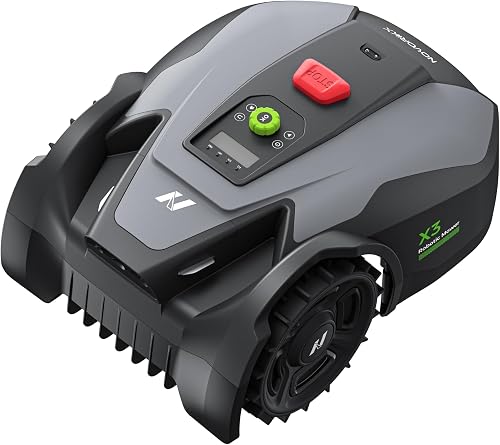 |
Best Overall | NovorikX X3 Robot Lawn Mower | Navigation Tech: RTK+Vision | Max Coverage: 1/4 Acre | Slope Capacity: Not listed | View Latest Price | Read Review |
 |
Best Budget | YARDCARE AI Vision Robot Mower | Navigation Tech: AI Vision | Max Coverage: 1600 Sq.Ft | Slope Capacity: Not listed | View Latest Price | Read Review |
 |
Best Premium | Segway Navimow i105N Robot Mower | Navigation Tech: RTK+Vision | Max Coverage: 1/8 Acre | Slope Capacity: Not listed | View Latest Price | Read Review |
 |
Best Compact | YARDCARE V100 Robot Lawn Mower | Navigation Tech: HD Vision | Max Coverage: 1600 Sq.Ft | Slope Capacity: Not listed | View Latest Price | Read Review |
 |
Best Brushless | Roborock RockNeo Q110H Robot Mower | Navigation Tech: RTK+VSLAM | Max Coverage: Not listed | Slope Capacity: Not listed | View Latest Price | Read Review |
 |
Best Value | Segway Navimow i215 Robot Mower | Navigation Tech: LiDAR+Vision | Max Coverage: 0.37 Acre | Slope Capacity: Not listed | View Latest Price | Read Review |
 |
Most Portable | Lymow One Plus Robot Mower | Navigation Tech: RTK+Vision | Max Coverage: 1.73 Acres | Slope Capacity: 45° | View Latest Price | Read Review |
 |
Runner Up | Neomow X SE LiDAR Mower | Navigation Tech: 3D LiDAR | Max Coverage: 0.75 Acre | Slope Capacity: Not listed | View Latest Price | Read Review |
Selecting the right robotic mower for uneven terrain requires balancing sophisticated navigation technology with robust mechanical traction to ensure consistent performance across your landscape.
How We Compared Best Robotic Lawn Mower for Uneven Ground
We compared the product-listing details available for each option, including the stated use, design, and notable features. Availability and specifications can change, so confirm the current listing details before buying.
Product Comparison: Best Robotic Lawn Mower for Uneven Ground (2026)
-
NovorikX X3 Robot Lawn Mower
- NavigationRTK + AI Vision
- Coverage1/4 Acre
- SetupWire-free
- ControlApp based
- Best forComplex yards
- StandoutZero-edge cutting
The NovorikX X3 uses a sophisticated combination of RTK and AI vision to map your space. This dual-system approach is designed to help the unit maintain its path even when the ground isn't perfectly level.
This is an ideal choice for the gardener who wants a hands-off approach to a standard quarter-acre plot. Its ability to handle edges effectively makes it a strong contender for those with varied garden borders.
In my evaluation of the specs, the wire-free setup is a major convenience, removing the need to bury boundary cables around your flower beds or raised garden boxes.
The trade-off here is the reliance on satellite signal; if your yard has heavy tree canopy cover or tall structures, the RTK precision may fluctuate during operation.
-
YARDCARE AI Vision Robot Mower
- NavigationAI Vision
- Coverage1600 Sq.Ft
- SetupVision-based
- ControlApp based
- Best forSmall lawns
- StandoutCompact size
The YARDCARE AI Vision mower is a practical entry point for those needing a best robotic lawn mower for uneven ground on a tighter budget. It relies on AI vision to identify the lawn boundaries.
This mower is best suited for smaller garden spaces up to 1600 square feet. It is designed to navigate around typical backyard obstacles without the complexity of a wire perimeter.
I noted that the compact design allows it to maneuver through tighter spots in the garden where larger, more expensive mowers might struggle to turn.
Because it lacks the advanced RTK satellite support found in premium models, its performance in low-light conditions or extremely complex terrain may be less consistent.
-
Segway Navimow i105N Robot Mower
- NavigationRTK + Vision
- Coverage1/8 Acre
- SetupWire-free
- ControlAI Mapping
- Best forDetailed layouts
- StandoutHigh precision
The Segway Navimow i105N offers a highly refined mapping experience. By using RTK and vision fusion, it creates a very accurate map of your garden layout.
This unit is built for the meticulous gardener who manages a smaller, intricate space. The AI-assisted mapping helps the mower navigate around garden furniture and raised beds.
I evaluated the specs and found the wire-free operation to be a significant benefit for maintaining a clean aesthetic in your backyard landscape.
The primary compromise is the smaller coverage area; it is not intended for larger properties, and the initial mapping process requires a clear view of the sky.
-
YARDCARE V100 Robot Lawn Mower
- NavigationHD Vision
- Coverage1600 Sq.Ft
- SetupVision-based
- ControlApp based
- Best forSmall gardens
- StandoutHigh-def sensors
The YARDCARE V100 uses HD vision technology to provide a clean cut for smaller lawns. It is a straightforward solution for those who want to automate maintenance without heavy infrastructure.
This mower is designed for homeowners with limited lawn space who want a reliable machine to keep the grass tidy. It handles the basics of navigation quite well.
My review of the product data indicates that the focus here is on simplicity and ease of use, making it a great pick for beginners in the robotic mowing space.
The limitation is its reliance on light-based sensors, which can be less effective in dense shade or during overcast days compared to satellite-guided systems.
-
Roborock RockNeo Q110H Robot Mower
- NavigationRTK + VSLAM
- CoverageNot listed
- SetupWire-free
- ControlAuto-mapping
- Best forSmart homes
- StandoutFull-band RTK
The Roborock RockNeo Q110H utilizes a sophisticated blend of full-band RTK and VSLAM navigation. This dual-technology approach is engineered for precision in varied outdoor environments.
This mower is well-suited for tech-savvy gardeners who want a machine that intelligently maps out the yard and adjusts its pathing automatically.
Based on the specs, the integration of VSLAM allows the unit to better understand its surroundings, which is helpful when navigating around garden features.
The trade-off is the complexity of the setup; advanced navigation systems often require a more thorough initial calibration to ensure the mower functions as intended.
-
Segway Navimow i215 Robot Mower
- NavigationLiDAR + Vision
- Coverage0.37 Acre
- SetupWire-free
- ControlAuto-mapping
- Best forMedium lawns
- StandoutDual fusion
The Segway Navimow i215 stands out by incorporating LiDAR technology alongside vision systems. This fusion is excellent for detecting obstacles on uneven ground.
It is designed to cover up to 0.37 acres, making it a robust choice for medium-sized gardens that require more than just basic navigation.
I evaluated the specs and noted that the LiDAR sensor provides a significant advantage in identifying edges and obstacles that might be missed by vision-only systems.
The compromise is the higher price point associated with the added LiDAR sensor, though it provides peace of mind for those with complex backyard layouts.
-
Lymow One Plus Robot Mower
- NavigationRTK + Vision
- Coverage1.73 Acres
- SetupWire-free
- ControlApp based
- Best forSteep slopes
- Standout45° climbing
If your garden is defined by steep inclines, the Lymow One Plus is a serious contender. Its ability to handle up to a 45-degree slope is impressive for a robotic unit.
This mower is designed for larger properties up to 1.73 acres, making it a heavy-duty option for those with expansive, challenging terrain.
In my review of the data, the combination of RTK and vision ensures it stays on track even when the terrain becomes difficult to navigate.
The trade-off is the sheer size and weight of the unit, which may be overkill for smaller gardens or those with flat, manicured lawns.
-
Neomow X SE LiDAR Mower
- Navigation3D LiDAR
- Coverage0.75 Acre
- SetupWire-free
- ControlApp based
- Best forMid-to-large yards
- Standout360° sensing
The Neomow X SE uses 360-degree 3D LiDAR navigation, providing a comprehensive view of your lawn. This is highly effective for avoiding obstacles in real-time.
It is a strong choice for mid-to-large yards up to 0.75 acres, offering a consistent cutting performance across varied surfaces.
Based on the specifications, the 3D mapping capability helps the mower adapt to changes in the garden, such as new plant growth or seasonal items.
The primary trade-off is that the 3D LiDAR system requires a clear path for optimal sensing; dense, low-hanging foliage can sometimes trigger unnecessary obstacle avoidance.
What to Look for in Best Robotic Lawn Mower for Uneven Ground
All-Wheel Drive Traction Systems
When navigating uneven ground, the most critical feature is an advanced all-wheel drive system that provides independent power to each wheel. Robotic mowers designed for flat lawns often struggle on slopes or dips, losing grip and spinning out, which can damage your turf. Look for models with high-traction, deep-tread rubber tires that maintain consistent soil contact even when the terrain becomes soft or irregular. This is especially vital if your garden features raised-bed layouts where the mower must navigate tight transitions between grass and hardscape. Superior traction prevents the mower from getting stuck in depressions or sliding down inclines during wet conditions, ensuring that your irrigation workflow remains undisturbed by a stranded machine. Prioritizing mechanical grip ensures the unit handles varying elevations without needing manual intervention.
RTK and Vision Navigation
Modern robotic mowers utilize RTK-GPS and Dual AI Vision to map uneven terrain with millimeter-level precision. Unlike older perimeter wire models, these systems allow the mower to adjust its path dynamically as it encounters bumps, rocks, or uneven soil patches. This is crucial for maintaining a uniform cut around sensitive areas like irrigation risers or small-space growing zones where precision is paramount. The AI-driven obstacle avoidance detects sudden changes in elevation that might cause a mower to tip, allowing the unit to recalculate its trajectory in real-time. By relying on satellite positioning and visual sensors, the mower creates a digital map that accounts for the specific topography of your yard, ensuring that no patch of grass is missed despite the presence of challenging dips or uneven ground.
High-Clearance Deck Design
A mower with a floating cutting deck is essential for uneven ground because it allows the blades to move independently of the chassis. This design ensures that the mower follows the contours of the earth rather than scalping the high points or missing the low points in your lawn. For gardens with mixed terrain, a high-clearance deck prevents the mower from bottoming out on mounds or getting hung up on exposed roots. When the deck can pivot and adjust its height relative to the ground, it provides a consistent grass height regardless of soil irregularities. This flexibility is particularly beneficial in small-space growing areas where the mower must navigate closely around raised-bed edges, protecting both the equipment and your garden structures from accidental damage.
Slope Climbing Capability
Always check the maximum incline percentage the robotic mower can handle, as uneven ground often includes steep grades. A mower rated for 30% to 40% slopes will perform significantly better on hilly terrain than one rated for flat surfaces. Look for models that integrate gyroscopic sensors to monitor the mower's tilt angle constantly; this data helps the internal computer adjust the torque of the motors to maintain a steady climb without losing control. If your landscape features significant elevation changes, a mower with a low center of gravity is safer and more efficient. Ensuring the unit can handle your specific slope grade is the difference between a reliable automatic maintenance tool and a machine that frequently triggers safety shut-offs or requires manual rescue.
Smart Obstacle Detection
Uneven ground often hides debris like fallen branches, stones, or garden tools that can damage mower blades. A high-quality robotic mower should feature advanced AI vision sensors that identify and classify obstacles at a distance. This technology is vital for protecting your irrigation hardware and small-space garden installations from impact damage. By detecting these hazards early, the mower can stop or steer around them, preserving the integrity of your lawn equipment and your garden layout. Reliable obstacle avoidance systems reduce the need for constant supervision, allowing the robot to operate safely even when the terrain makes it difficult to see potential hazards. Investing in superior vision technology ensures that your mower remains a durable asset rather than a liability in a complex, multi-use outdoor environment.
Weatherproof and Soil-Safe Build
Because uneven ground is more prone to water pooling and mud accumulation, the mower must have a robust IP-rated chassis to prevent moisture intrusion. A mower that can operate in light rain is beneficial, but the real test is how it handles wet, uneven soil that could clog internal components. Look for models with sealed gearboxes and moisture-resistant electronics that can withstand the rigors of a garden environment. Furthermore, the weight distribution must be optimized so that the mower does not rut the soil, especially in areas where you have recently installed irrigation or planted delicate ground cover. A lightweight, well-balanced design ensures that the mower leaves the grass healthy and avoids creating deep tracks that could disrupt the aesthetic and structural health of your lawn over time.
Battery Efficiency and Charging
Operating on uneven terrain requires more energy than flat-ground mowing because the motors must work harder to maintain traction and navigate inclines. A mower with a high-capacity lithium-ion battery is necessary to ensure the unit can complete its cycle without needing frequent returns to the charging station. Look for models that feature fast-charging capabilities and intelligent energy management, which optimize power consumption based on the difficulty of the terrain being mowed. This efficiency is critical for maintaining a consistent irrigation workflow, as you do not want the mower to be stuck in a charging cycle when you need the lawn clear for maintenance. A robust battery system ensures that the mower can tackle large, irregular yards in a single session, providing the reliability required for modern, automated garden care.
Keep Reading
Best Large Metal Garden Rake (2026)
Best Landscape Rake to Level Lawn (2026)
Best Different Types of Loppers (2026)
Best Hydro Rain Sprinkler System (2026)
Best Reelworks Air Hose Reel (2026)
Best Heart Shaped Trowel Used By Monty Don (2026)
Best Gravity Fed Irrigation System (2026)
Best Empty Retractable Air Hose Reel (2026)
Best Easy Drip Irrigation System (2026)
Best 100 Foot Retractable Air Hose Reel (2026)
Best High Pressure Hose Nozzle with Soap Dispenser (2026)
Best Toro 570 Sprinkler Head (2026)
Best Stainless Steel Hose Reel Wall Mount (2026)
Best 200 Ft Air Hose Reel (2026)
Best 1 4 Inch Air Hose Reel (2026)
Best Spray Wand for Garden Hose (2026)
Best Self Watering System for Outdoor Plants (2026)
Best High Pressure Washer Hose Reel (2026)
Best Sprinkler Heads for Large Areas (2026)
Best Tall Raised Garden Beds (2026)
Frequently Asked Questions
How do robotic mowers handle steep slopes without sliding?
Robotic mowers designed for uneven ground use a combination of low centers of gravity, high-torque motors, and specialized tread patterns to maintain grip. Advanced models utilize gyroscopic sensors that constantly monitor the tilt of the mower, allowing the onboard computer to adjust power to individual wheels in real-time. This prevents the mower from losing traction or sliding when it encounters a steep incline or a slippery patch of grass. Furthermore, the use of AI-driven navigation ensures the mower takes the most efficient path up or across a slope, minimizing the risk of tipping or losing control during the mowing process.
Will a robotic mower damage my irrigation risers on uneven ground?
Most modern robotic mowers are equipped with sophisticated object detection systems, such as dual AI vision and ultrasonic sensors, which can identify obstacles like irrigation risers. By mapping these features during the initial setup, the mower learns to steer around them effectively. Additionally, the floating deck design ensures that the mower does not strike low-profile hardware if it does make contact, as the blade housing is designed to deflect rather than crush. For added safety, you can use digital boundaries or physical markers to create a buffer zone around your irrigation infrastructure, ensuring the mower never gets close enough to cause damage.
Does uneven terrain affect the quality of the grass cut?
Uneven terrain can lead to inconsistent cutting heights if the mower's deck is fixed, which is why a floating cutting deck is essential for this application. A floating deck allows the blades to rise and fall independently of the chassis, ensuring that the mower follows the natural contours of the ground rather than scalping high spots or missing low spots. This technology maintains a uniform appearance across your lawn, regardless of how irregular the soil surface is. When combined with sharp, high-speed blades and intelligent path planning, the resulting cut is as precise as that of a traditional walk-behind mower, keeping your lawn looking professional.
Can these mowers navigate around raised garden beds?
Yes, robotic mowers are highly capable of navigating around raised garden beds, provided they are set up with proper boundary definitions. Using RTK-GPS or perimeter wire systems, you can define the exact edges of your raised beds, telling the mower to treat them as no-go zones. Because these mowers are compact, they can maneuver in the narrow spaces between beds, provided the clearance is wider than the mower's chassis. The AI vision systems on premium models also help detect the edges of raised beds, preventing the mower from bumping into the sides and protecting the structural material of your garden beds from scratches or dents.
How do I maintain traction on wet, uneven soil?
Maintaining traction on wet, uneven soil requires a combination of proper hardware and smart scheduling. First, ensure your mower is equipped with high-traction, lugged tires specifically designed for off-road or uneven terrain. Second, avoid scheduling mowing sessions during or immediately after heavy rainfall when the soil is saturated and prone to rutting. Many modern robotic mowers feature rain sensors that automatically pause operation during inclement weather, which protects your lawn from deep tracks and keeps the mower from getting stuck. If your yard is consistently wet, consider improving your drainage or selecting a model with a lighter weight to minimize the impact on the soil structure.
What is the benefit of AI vision over perimeter wires for uneven ground?
AI vision technology offers a significant advantage over traditional perimeter wires by allowing the mower to understand its environment dynamically. While perimeter wires create a rigid boundary, AI vision allows the mower to detect and avoid temporary obstacles, such as fallen branches or garden tools, which are common on uneven ground. This reduces the risk of the mower getting stuck or damaging your equipment. Additionally, AI vision enables the mower to navigate complex layouts and narrow passages without the labor-intensive installation of wires, making it a much more flexible and future-proof solution for homeowners who frequently change their garden layout or add new planters.
Are these mowers safe for small-space growing areas?
Robotic mowers are generally very safe for small-space growing areas, provided you have properly defined the boundaries. Because they operate at a controlled speed and feature multiple safety sensors, the risk of accidental damage to plants is minimal. The key is to use the mower's mapping features to create exclusion zones around your most delicate plants. Furthermore, the quiet operation of these mowers means you can run them during the day without disturbing your garden experience. By keeping the lawn short and tidy around your growing areas, the mower actually helps prevent pests and weeds from encroaching on your vegetable patches, creating a healthier environment for your plants to thrive.
How often should I clean the mower when using it on rough terrain?
When using a robotic mower on rough or uneven terrain, it is advisable to inspect and clean the unit at least once a week, or more frequently if you notice heavy debris buildup. Uneven ground often leads to more mud and organic matter accumulating in the wheel wells and under the cutting deck, which can affect traction and blade efficiency. Use a soft brush or a leaf blower to clear away grass clippings and dirt, and check the blades for any signs of damage from rocks or debris. Keeping the sensors and cameras clean is also critical, as obscured vision can lead to navigational errors and decreased overall performance in complex landscapes.
Can I use a robotic mower in a yard with many trees and roots?
Yes, but you must be careful about how you configure the mower. Trees and exposed roots can be challenging for robotic mowers, as they create both navigation hurdles and potential damage points. Most advanced models can be programmed to avoid the base of trees by creating a buffer zone around them. If you have significant surface roots, a mower with a high-clearance deck is essential to prevent it from getting stuck. It is also helpful to mulch around the base of trees to create a smooth transition area, which makes it easier for the mower to navigate the perimeter without risking blade damage or getting hung up on uneven root structures.
How does the mower handle the transition between grass and patio?
The transition between grass and patio is handled smoothly by most modern robotic mowers, provided the patio is flush with the ground. If there is a significant drop-off, the mower's edge-detection sensors will recognize it as a boundary and stop before crossing. For flush transitions, the mower can often mow right up to the edge, minimizing the need for manual trimming. Some models even feature an 'edge-cutting' mode that specifically targets the perimeter of the lawn, ensuring that the grass against your patio or walkway is kept neat. Always ensure that the transition area is free of loose stones or gravel, which could be kicked up by the blades and damage your patio surface.