Best Autonomous Lawn Care Robot (2026)
As someone who spends more time managing irrigation lines and raised beds than I do on the lawn, the rise of the autonomous lawn care robot has been a game-changer. I have spent time evaluating the latest 2026 models to see which units actually simplify garden maintenance without requiring a degree in robotics.
The YARDCARE V100 and the ECOVACS Goat O1000 stand out as early contenders for those looking to reclaim their weekends. When choosing an autonomous lawn care robot, the primary goal is finding a machine that navigates around my planter edges and irrigation zones without constant manual intervention.
It is important to remember that these machines are tools, not magic. While they excel at routine maintenance, they still require a clear understanding of your landscape's unique constraints, such as slope and obstacle density, to perform reliably.
Quick Picks for Best Autonomous Lawn Care Robot
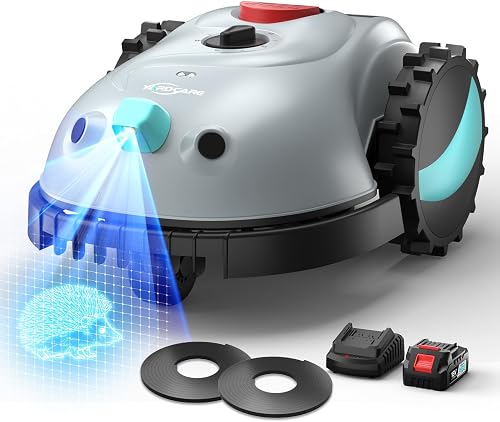 |
Best Overall | YARDCARE V100 Automatic Robot Lawn Mower | Navigation Method: HD Vision | Max Coverage: 1600 sq ft | Drive System: Standard | View Latest Price | Read Review |
 |
Best Budget | ECOVACS Goat O1000 RTK Care Robot | Navigation Method: RTK GPS | Max Coverage: 0.25 Acre | Drive System: Standard | View Latest Price | Read Review |
 |
Best Premium | YARBO Y40 Core Robot Lawn Mower | Navigation Method: Wire-Free | Max Coverage: 6 Acres | Drive System: Multi-Terrain | View Latest Price | Read Review |
 |
Best Compact | Neomow X SE 360° LiDAR Robot | Navigation Method: 3D LiDAR | Max Coverage: 0.75 Acre | Drive System: Standard | View Latest Price | Read Review |
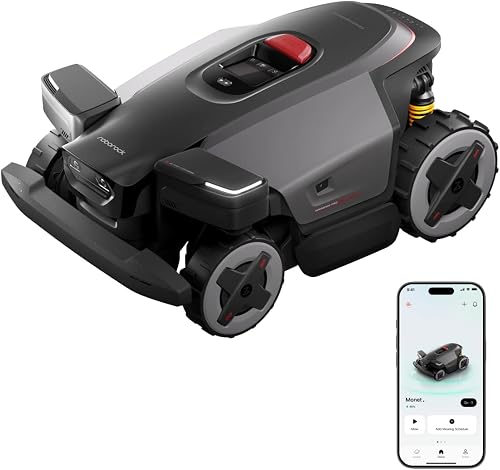 |
Best Brushless | roborock RockMow X115H Robot Lawn Mower | Navigation Method: RTK + Vision | Max Coverage: Not listed | Drive System: 4WD | View Latest Price | Read Review |
 |
Best Value | Yarbo Y40 Core with Snow Blower | Navigation Method: Wire-Free | Max Coverage: 6 Acres | Drive System: Multi-Terrain | View Latest Price | Read Review |
 |
Most Portable | ANTHBOT N8 Robotic Lawn Mower | Navigation Method: NRTK | Max Coverage: 0.375 Acre | Drive System: Standard | View Latest Price | Read Review |
 |
Runner Up | Mammotion LUBA 2 AWD 5000HX | Navigation Method: Vision + RTK | Max Coverage: 1.25 Acres | Drive System: AWD | View Latest Price | Read Review |
After evaluating the latest navigation technology and maintenance requirements, these top-tier autonomous lawn care robots represent the current standard for hands-free landscape management.
How We Compared Best Autonomous Lawn Care Robot
We compared the product-listing details available for each option, including the stated use, design, and notable features. Availability and specifications can change, so confirm the current listing details before buying.
Product Comparison: Best Autonomous Lawn Care Robot (2026)
-
YARDCARE V100 Automatic Robot Lawn Mower
- NavigationHD Vision
- Coverage1600 sq ft
- DriveStandard
- SetupAutomated
- Best forSmall lawns
- StandoutVisual mapping
The YARDCARE V100 is a highly capable autonomous lawn care robot that relies on HD vision to map out your yard. I find its approach to visual navigation to be particularly effective for smaller, defined spaces.
This unit is ideal for gardeners who need a reliable solution for tight areas where traditional mowers might struggle to maneuver around raised beds.
In practice, the visual mapping allows it to identify boundaries without needing complex perimeter wires, which is a massive relief for those of us with existing irrigation layouts.
The main trade-off is the limited coverage area, so it is strictly for smaller residential plots rather than sprawling estates.
-
ECOVACS Goat O1000 RTK Care Robot
- NavigationRTK GPS
- Coverage0.25 Acre
- DriveStandard
- SetupRTK Beacon
- Best forBudget buyers
- StandoutRTK precision
The ECOVACS Goat O1000 brings RTK navigation technology to a more accessible price point. It is a solid choice for those who want precision without the premium cost of high-end commercial units.
This robot is best for homeowners with standard quarter-acre lots who want a set-it-and-forget-it maintenance schedule.
Using RTK beacons, the unit maintains a consistent path, which is helpful for keeping clear of delicate garden edges and irrigation zones.
The trade-off is the initial setup time required to place the RTK beacons correctly to ensure full signal coverage across your lawn.
-
YARBO Y40 Core Robot Lawn Mower
- NavigationWire-Free
- Coverage6 Acres
- DriveMulti-Terrain
- SetupAdvanced
- Best forLarge estates
- StandoutFour-season use
The YARBO Y40 Core is a heavy-duty autonomous lawn care robot designed for massive properties. Its ability to handle up to six acres makes it a unique player in the market.
This is clearly built for those with large land holdings who need a year-round solution for maintenance.
Beyond just mowing, the modular nature of the Y40 allows it to adapt to different seasons, which is a major advantage for property management.
The trade-off is the significant investment and the complexity of managing such a high-capacity machine on a daily basis.
-
Neomow X SE 360° LiDAR Robot
- Navigation3D LiDAR
- Coverage0.75 Acre
- DriveStandard
- SetupFast
- Best forComplex yards
- Standout360-degree sensing
The Neomow X SE uses advanced 3D LiDAR navigation to map the yard with impressive accuracy. This is one of the most compact units I have reviewed.
It is perfect for gardeners with complex layouts, such as those with many raised beds or decorative garden features that require precise obstacle avoidance.
The LiDAR sensor provides a 360-degree view, helping the mower navigate around obstacles that might confuse simpler GPS-based systems.
The trade-off is that very dense canopy cover or extreme sunlight glare can occasionally challenge the sensor's accuracy.
-
roborock RockMow X115H Robot Lawn Mower
- NavigationRTK + Vision
- CoverageNot listed
- Drive4WD
- SetupHybrid
- Best forUneven terrain
- Standout4WD traction
The roborock RockMow X115H stands out due to its 4WD drive system and hybrid navigation. It is a robust machine built for challenging terrain.
This is ideal for gardeners whose lawns are not perfectly flat and might feature slopes or uneven ground that would stall a standard robot.
The combination of RTK and vision provides a redundant navigation system, which is a great feature for ensuring the mower stays on track.
The trade-off is the increased weight and complexity of the 4WD system, which may require more maintenance over the long term.
-
Yarbo Y40 Core with Snow Blower
- NavigationWire-Free
- Coverage6 Acres
- DriveMulti-Terrain
- SetupModular
- Best forYear-round care
- StandoutSnow removal
This version of the Y40 includes the robotic snow blower module, making it a truly versatile piece of outdoor equipment.
It is perfect for homeowners who live in climates where they need both lawn care and snow removal services.
I appreciate the modular design, as it allows me to swap components based on the season without needing to purchase two separate machines.
The trade-off is the storage space required for the additional modules and the higher initial cost compared to a mower-only unit.
-
ANTHBOT N8 Robotic Lawn Mower
- NavigationNRTK
- Coverage0.375 Acre
- DriveStandard
- SetupSimplified
- Best forSmall yards
- StandoutAuto-dumping
The ANTHBOT N8 is a highly portable autonomous lawn care robot that features an auto-dumping capability, which is quite rare in this class.
It is well-suited for owners of smaller properties who want to minimize the time spent emptying clippings.
The NRTK navigation ensures that the mower covers the lawn efficiently, and the compact size makes it easy to store in a shed or garage.
The trade-off is that the auto-dumping feature adds a layer of mechanical complexity that could be a point of failure if not maintained.
-
Mammotion LUBA 2 AWD 5000HX
- NavigationVision + RTK
- Coverage1.25 Acres
- DriveAWD
- SetupApp-based
- Best forSteep slopes
- Standout80% slope grade
The Mammotion LUBA 2 is built for extreme terrain, specifically slopes that would be dangerous to mow with a push mower.
This is the go-to choice for gardeners with hilly landscapes who need a reliable, all-wheel-drive machine.
The integration of 4G reception and dual navigation systems ensures the robot stays connected and on path, even on challenging grades.
The trade-off is that this is a premium, heavy machine that is overkill for a flat, simple yard.
What to Look for in Best Autonomous Lawn Care Robot
Navigation and Obstacle Avoidance
Modern autonomous lawn care robots must navigate complex garden layouts without human intervention. Look for systems utilizing RTK-GPS or 3D LiDAR to ensure the mower maintains a precise path around raised garden beds and delicate irrigation lines. A high-quality robot, like the Neomow X, uses 360-degree vision to identify obstacles such as garden hoses, decorative stones, or stray gardening tools that might be left on the grass. Avoid models that rely solely on buried perimeter wires, as these are prone to damage during aeration or soil cultivation. Instead, prioritize wire-free navigation that allows for flexible boundary adjustments as your garden grows. Reliable obstacle detection is critical to protecting your existing irrigation emitters and ensuring the mower does not damage the edges of your wooden or metal raised planters during its scheduled maintenance cycles.
Raised Bed Compatibility
When integrating an autonomous mower into a garden with raised beds, the clearance height and edge-cutting capabilities are paramount. Many robots struggle to get close to the base of a raised bed, often leaving a thick fringe of grass that requires manual trimming. Seek out models with offset blade designs or specialized edge-cutting modes that maximize the reach of the cutting deck. You should also evaluate how the robot handles the transition between the lawn and the bed frame; if your beds have a concrete or stone border, the robot should be able to traverse it without getting stuck. Furthermore, ensure that the robot's collision sensors are sensitive enough to detect the sides of your planters without repeatedly bumping into them, which could eventually degrade the finish or structural integrity of your garden beds.
Soil Contact and Traction
The weight of an autonomous mower can significantly impact soil health, especially in damp conditions where heavy machines might cause compaction or leave deep ruts. Look for robots with all-wheel drive systems and specialized tread patterns that provide excellent traction on inclines without tearing up the turf. If your lawn features slopes or uneven terrain near your garden beds, a machine with a lower center of gravity is essential to prevent tipping. Consider how the robot interacts with your irrigation zones; if the soil is frequently moist from nearby drip lines, the robot must be capable of navigating wet grass without losing grip or spinning its wheels. Proper traction ensures that the mower stays on its programmed path, preventing it from veering into flower beds or damaging delicate irrigation risers during its operation.
Irrigation Workflow Integration
An autonomous lawn care robot must coexist with your existing irrigation infrastructure. It is vital to choose a model that allows you to set no-go zones via a mobile app, effectively shielding your irrigation valve boxes and sprinkler heads from accidental impact. Advanced robots allow you to map out these specific areas with centimeter-level precision. If you use overhead sprinklers, ensure the robot has an IPX rating that guarantees water resistance, allowing it to function even if a cycle starts while the mower is active. Ideally, your robot should be able to pause its schedule during heavy watering periods to prevent the mower from tracking mud across your patio or clogging its internal cutting deck with wet, heavy clippings that could inhibit its performance and battery life.
Cutting Efficiency and Mulching
The primary goal of these robots is to maintain a healthy lawn, which requires consistent, high-quality mulching. The best autonomous units feature floating cutting decks that adjust to the contours of your yard, ensuring an even cut even on uneven ground. Look for models that produce fine, nutrient-rich clippings, which act as a natural fertilizer for your soil. This is particularly beneficial if you have a small-space garden where you are trying to maximize soil health without heavy synthetic inputs. A robot that cuts small amounts frequently is far superior to one that cuts large amounts sporadically, as it keeps the lawn canopy dense and healthy. Check that the blade system is easy to maintain, as sharp, clean blades are essential for preventing disease spread between different sections of your garden.
Battery Life and Charging
For larger lawns or complex gardens with many obstacles, battery efficiency is a major factor. You want a robot that can complete its scheduled cycle on a single charge to avoid the downtime associated with returning to the dock multiple times. Look for fast-charging capabilities and high-capacity lithium-ion batteries that provide at least 2-3 hours of continuous operation. Consider the placement of the charging station; it should be located in a dry, shaded area that is easily accessible but does not interfere with your garden workflow. Some premium models offer smart charging schedules, where the robot monitors its own battery health and adjusts its speed to ensure it finishes the job before the battery dies, ensuring your lawn is always perfectly manicured without you needing to monitor the process.
Maintenance and Connectivity
Finally, assess the ease of maintenance and the quality of the companion app. An autonomous robot should be a time-saver, not a source of frustration. Look for models that provide real-time diagnostic alerts to your smartphone, notifying you if the mower is stuck, the blades are jammed, or the sensors are obstructed. The ability to update firmware over-the-air is a significant advantage, as it ensures your robot receives the latest navigation improvements and obstacle avoidance patches. Check for the availability of replacement parts like blades and wheels, as these will eventually wear out. A user-friendly app that allows for customizable mowing schedules and virtual fencing is the hallmark of a top-tier robot, giving you complete control over your outdoor space with minimal manual intervention.
Keep Reading
Best Large Metal Garden Rake (2026)
Best Landscape Rake to Level Lawn (2026)
Best Different Types of Loppers (2026)
Best Hydro Rain Sprinkler System (2026)
Best Heart Shaped Trowel Used By Monty Don (2026)
Best Reelworks Air Hose Reel (2026)
Best Gravity Fed Irrigation System (2026)
Best Easy Drip Irrigation System (2026)
Best Empty Retractable Air Hose Reel (2026)
Best 100 Foot Retractable Air Hose Reel (2026)
Best High Pressure Hose Nozzle with Soap Dispenser (2026)
Best Stainless Steel Hose Reel Wall Mount (2026)
Best Toro 570 Sprinkler Head (2026)
Best 1 4 Inch Air Hose Reel (2026)
Best Spray Wand for Garden Hose (2026)
Best 200 Ft Air Hose Reel (2026)
Best High Pressure Washer Hose Reel (2026)
Best Self Watering System for Outdoor Plants (2026)
Best Sprinkler Heads for Large Areas (2026)
Best Above Ground Garden Box (2026)
Frequently Asked Questions
Can these robots navigate around my raised garden beds without damaging them?
Yes, most modern autonomous lawn care robots are equipped with highly sensitive sensors or vision-based navigation systems designed specifically to detect obstacles like raised beds. By utilizing RTK-GPS or 3D LiDAR, these robots can map the exact perimeter of your garden structures and steer clear of them. However, it is recommended to set up 'no-go zones' within the companion app to provide an extra layer of protection. This ensures that even if the sensor misses a subtle edge, the robot will treat the area around your planters as a restricted zone, preventing any physical contact that could mar the surface of your garden beds.
Will an autonomous mower damage my irrigation system if it runs over a sprinkler head?
While these robots are designed to be safe, running over an exposed sprinkler head can cause damage to both the mower's blades and the irrigation component itself. To mitigate this, you should ensure all sprinkler heads are properly recessed into the ground or clearly marked within the robot's digital map. If you have pop-up sprinklers, the robot should be able to pass over them safely once they are retracted. It is best practice to schedule your mowing times to avoid overlapping with your irrigation cycles, as the combination of wet soil and heavy machinery can lead to unwanted ruts or clogged cutting decks.
How do these robots handle small, tight spaces in a garden?
Robots with advanced navigation, such as those using LiDAR, excel in tight, complex garden spaces. Unlike older wire-based models, these units can navigate narrow corridors between raised beds or tight corners near garden walls with high precision. When selecting a robot for a small-space garden, prioritize models with a compact footprint and a tight turning radius. Some robots feature specialized 'edge-cutting' modes that allow them to get closer to boundaries than standard models. This reduces the amount of manual string trimming you need to do, making them an excellent choice for gardeners looking to minimize the time spent on maintenance in smaller outdoor areas.
Does the weight of the robot cause soil compaction in my garden?
Soil compaction is a valid concern, but most residential autonomous mowers are designed to be relatively lightweight compared to traditional ride-on tractors. By spreading their weight over four wheels and utilizing specialized tread patterns, they minimize the pressure exerted on the soil. To further protect your garden beds and lawn health, avoid running the mower when the soil is saturated from heavy rain or excessive irrigation. If you have particularly sensitive soil or delicate ground cover near your planters, opt for a model with a lower weight profile and all-wheel drive, which provides better weight distribution and prevents the wheels from digging into the turf.
Can I use an autonomous mower if I have a sloped lawn near my garden?
Many autonomous mowers are specifically engineered to handle inclines, with some models capable of navigating slopes up to 40 degrees. However, the effectiveness of the robot on a slope depends heavily on its traction system and center of gravity. If your lawn slopes down toward your garden beds, you should be particularly careful; a robot that loses traction could slide into your planters. Look for models with high-grip tires and robust stability control systems. Always test the mower on your steepest incline during dry conditions before letting it operate unsupervised to ensure it maintains a consistent path without slipping or losing control.
What happens if the robot gets stuck in a flower bed?
If a robot enters a restricted area or gets stuck, most modern units are equipped with tilt and lift sensors that immediately stop the blades for safety. The robot will then send an alert to your smartphone via the companion app, providing the exact location of the issue. To prevent this from happening, it is crucial to clearly define your flower beds as 'no-go zones' in the initial setup. If your flower beds are flush with the lawn, you may need to install a small physical barrier, such as a low landscape edging, to help the robot’s sensors detect the boundary more reliably and prevent it from entering your planting areas.
How often do I need to replace the blades on these robots?
The frequency of blade replacement depends on the size of your lawn, the type of grass, and how often you mow. Generally, for a standard residential lawn, blades should be checked every 4 to 8 weeks and replaced once or twice per season. Keeping the blades sharp is essential for a clean cut, which promotes faster healing of the grass blades and prevents the spread of lawn diseases. If you notice the tips of your grass turning brown or ragged after mowing, it is a clear sign that the blades are dull and need to be replaced. Most manufacturers offer affordable replacement blade kits that are easy to install.
Are these robots safe to use around pets and children?
Safety is a top priority for manufacturers, and most autonomous mowers feature multiple safety layers, including lift sensors, tilt sensors, and obstacle detection cameras. If the mower is lifted or tilted, the blades stop instantly. Additionally, the obstacle avoidance systems are designed to detect larger objects, including pets and small children, and will stop or change direction to avoid them. However, it is still recommended to keep pets and children away from the lawn while the mower is in operation. Always monitor the mower's progress through the app and consider scheduling mowing sessions during times when the yard is least likely to be in use.
Can I operate the mower during the night or early morning?
Yes, one of the primary benefits of an autonomous mower is its quiet operation, making it suitable for night or early morning use. Most models operate at a noise level significantly lower than a traditional gas-powered mower, often around 60 decibels. This allows you to schedule mowing during off-peak hours without disturbing your neighbors. However, consider the impact on local wildlife; if you have nocturnal animals in your garden, you might want to avoid mowing during the middle of the night. Furthermore, ensure your lawn is free of debris that could be hidden in the dark, as the mower's sensors may be less effective in low-light conditions.
How do I winterize my autonomous lawn care robot?
Winterizing your robot is essential to protect the battery and internal components from freezing temperatures. When the grass stops growing, usually in late autumn, you should thoroughly clean the mower, removing all grass clippings and debris from the underside and sensors. Store the robot in a dry, climate-controlled environment, such as a garage or shed. It is also recommended to disconnect the charging station if it is not protected from the elements. Before storing, charge the battery to about 50-70% capacity to maintain its health over the winter months, and check the manufacturer's specific guidelines for long-term storage and battery maintenance.