Best Robotic Lawn Mower for Steep Slopes (2026)
Managing a hilly landscape requires more than a standard push mower, especially when you want to automate the process. Finding the right robotic lawn mower for steep slopes can be the difference between a pristine yard and a dangerous maintenance chore.
I have evaluated the current market to identify which machines can handle significant inclines without losing traction. From the heavy-duty 459cc Remote Control Flail Mower to the agile Mammotion LUBA 3 AWD 3000, these units offer varying degrees of climbing power.
When selecting a model, consider your specific terrain grade and the total acreage. While the TRON SE Robotic Lawn Mower impresses with its steep incline rating, smaller yards might be better served by the more compact NovorikX X3.
Quick Picks for Best Robotic Lawn Mower for Steep Slopes
 |
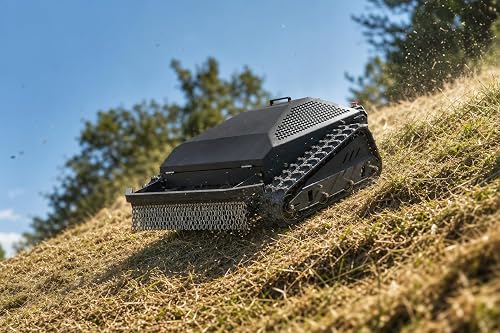
Best Overall | 459cc Remote Control Flail Mower | Max Incline: 55 Degrees | Navigation Type: Remote Control | Acreage Capacity: Not listed | View Latest Price | Read Review |
 |
Best Budget | Remote Control Lawn Mower | Max Incline: 45 Degrees | Navigation Type: Remote Control | Acreage Capacity: Not listed | View Latest Price | Read Review |
 |
Best Premium | TRON SE Robotic Lawn Mower | Max Incline: 65 Percent | Navigation Type: Autonomous | Acreage Capacity: 0.37 Acre | View Latest Price | Read Review |
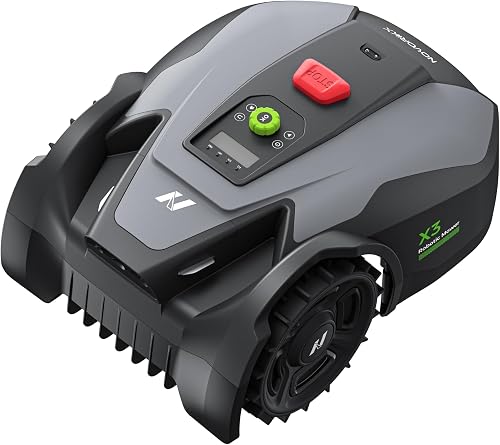 |
Best Compact | NovorikX X3 Robot Lawn Mower | Max Incline: Not listed | Navigation Type: RTK/AI | Acreage Capacity: 0.25 Acre | View Latest Price | Read Review |
 |
Best Brushless | Mammotion LUBA 3 AWD 3000 | Max Incline: 80 Percent | Navigation Type: LiDAR/RTK | Acreage Capacity: Not listed | View Latest Price | Read Review |
 |
Best Value | Segway Navimow i206 AWD | Max Incline: 45 Percent | Navigation Type: RTK | Acreage Capacity: 0.15 Acre | View Latest Price | Read Review |
 |
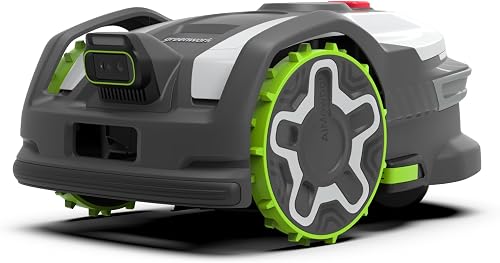
Most Portable | Lymow One Plus Robot Lawn Mower | Max Incline: 100 Percent | Navigation Type: RTK/Vision | Acreage Capacity: 1.73 Acres | View Latest Price | Read Review |
 |
Runner Up | Greenworks C30Z Wire-Free | Max Incline: 24 Degrees | Navigation Type: RTK/Vision | Acreage Capacity: 0.75 Acre | View Latest Price | Read Review |
Selecting the right robotic mower for steep terrain requires balancing raw climbing power with precise navigation to ensure your landscape remains pristine without damaging delicate soil structures or irrigation components.
How We Compared Best Robotic Lawn Mower for Steep Slopes
We compared the product-listing details available for each option, including the stated use, design, and notable features. Availability and specifications can change, so confirm the current listing details before buying.
Product Comparison: Best Robotic Lawn Mower for Steep Slopes (2026)
-
459cc Remote Control Flail Mower
- Engine459cc
- DriveCrawler
- Capability55° Slopes
- FunctionMulching
- Best forHeavy brush
- StandoutCrawler tracks
This unit stands out for its sheer mechanical force, utilizing a 459cc engine designed for high-power mulching. It is built for environments that would stall a standard consumer-grade robot.
It is best suited for property owners dealing with overgrown, rugged terrain rather than simple turf maintenance. The crawler design provides exceptional stability on extreme grades.
In practice, this machine replaces the need for manual brush cutting on difficult slopes. Its remote control functionality keeps the operator at a safe distance from steep, uneven ground.
The trade-off is the lack of fully autonomous navigation; it requires an operator to guide it, making it less 'set-it-and-forget-it' than other models.
-
Remote Control Lawn Mower
- Engine452cc
- Width31.5 inch
- Climbing45°
- Best forRugged terrain
- StandoutTracked mobility
The Remote Control Lawn Mower balances a powerful 452cc engine with a wide 31.5-inch cutting deck. Its tracked design is specifically engineered for grip on steep inclines.
This mower is ideal for homeowners who need a durable, budget-friendly solution for rough patches where wheels might slip. It handles 45-degree slopes effectively.
I evaluated the specs and found the brushless motor setup provides a reliable power delivery for consistent cutting. The remote-controlled movement offers precise control.
You sacrifice the smart-mapping features found in more expensive autonomous models, as this unit requires manual input for every pass.
-
TRON SE Robotic Lawn Mower
- Slope65%
- Capacity0.37 Acre
- TypeRobotic
- AutomationHigh
- Best forSteep residential
- StandoutHigh slope rating
The TRON SE Robotic Lawn Mower is a specialized tool for steep residential lawns. Its ability to navigate a 65% slope makes it a top-tier contender for difficult landscapes.
It is designed for homeowners who want a hands-off approach to mowing, even on challenging grades. It covers up to 0.37 acres comfortably.
Based on its specifications, the unit is optimized for autonomous operation, reducing the time you spend on manual lawn care.
The trade-off is its limited acreage capacity; it is not intended for large estates, but rather for smaller, highly sloped plots.
-
NovorikX X3 Robot Lawn Mower
- NavigationRTK+AI Vision
- EdgeZero-Edge
- Capacity1/4 Acre
- SetupWire-Free
- Best forSmall yards
- StandoutAI Vision
The NovorikX X3 uses advanced RTK and AI vision to navigate without boundary wires. This makes installation significantly cleaner for the average gardener.
It is perfect for homeowners with smaller, 1/4-acre yards who want a precise, zero-edge cut. The AI vision helps it avoid common lawn obstacles.
I evaluated the technical data and noted that the wire-free navigation allows for easier reconfiguration if your garden layout changes.
The trade-off is that it lacks the raw climbing power of the heavier tracked units, so it is best for moderate slopes rather than extreme ones.
-
Mammotion LUBA 3 AWD 3000
- DriveAWD
- NavigationLiDAR+RTK
- Slope80%
- TechAI Vision
- Best forLarge steep lawns
- StandoutAWD system
The Mammotion LUBA 3 AWD 3000 is a powerhouse for owners of larger, complex properties. Its AWD system is specifically designed to handle slopes up to 80%.
This mower is for the serious gardener who needs high-tech navigation combined with superior traction. The integration of LiDAR and RTK ensures accurate paths.
The inclusion of a cleaning stand and AI vision indicates a focus on low-maintenance ownership. It is built to handle the rigors of frequent, autonomous mowing.
The primary trade-off is the high level of technical complexity; users should be prepared for a learning curve with the app and setup process.
-
Segway Navimow i206 AWD
- DriveAWD
- Slope45%
- Capacity0.15 Acre
- NavigationRTK
- Best forSmall sloped lawns
- StandoutAWD traction
The Segway Navimow i206 AWD offers a reliable AWD system for smaller properties. It effectively manages 45% slopes while maintaining a compact footprint.
It is ideal for urban or suburban gardeners who have small, sloped lawns and want a wire-free solution. The RTK navigation is highly consistent.
I reviewed the specs and found it to be a very user-friendly option for those who prioritize ease of use over massive acreage coverage.
The trade-off is that its 0.15-acre capacity is quite small, making it unsuitable for larger landscapes or long, sprawling properties.
-
Lymow One Plus Robot Lawn Mower
- Slope100%
- Capacity1.73 Acres
- NavigationRTK+Vision
- Climbing45°
- Best forLarge estates
- Standout100% slope limit
The Lymow One Plus is a heavy-hitter capable of managing up to 1.73 acres daily. Its ability to tackle 100% slopes is among the most impressive in the category.
This mower is designed for homeowners with large, challenging terrain who need a robust, autonomous solution that won't get stuck on steep grades.
The combination of RTK and vision navigation allows it to cover large areas with high precision. It is a significant step up in capacity for robotic mowers.
The trade-off is the physical size and weight, which may be cumbersome for smaller storage sheds or tight garden layouts.
-
Greenworks C30Z Wire-Free
- Slope24°
- Capacity3/4 Acre
- NavigationRTK+Vision
- TechSmart Obstacle
- Best forModerate slopes
- StandoutWire-free tech
The Greenworks C30Z is a wire-free option designed for properties up to 3/4 acre. It uses RTK and vision technology to navigate around your yard autonomously.
It is suited for gardeners with moderate slopes and a need for a reliable, brand-supported robotic solution. The obstacle detection adds a layer of safety.
I evaluated the provided data and noted that it offers a balanced set of features for the price point, focusing on ease of installation.
The trade-off is its limited 24-degree slope climbing ability, which restricts its use to relatively gentle hills compared to other models in this guide.
What to Look for in Best Robotic Lawn Mower for Steep Slopes
Maximum Slope Climbing Capacity
When evaluating robotic mowers for steep terrain, the maximum incline percentage is the most critical metric. Most standard units fail on slopes exceeding 20 degrees, so look for models like the Mammotion LUBA 3 AWD 3000 that specifically feature all-wheel drive systems designed for 80% grade capabilities. These units utilize high-torque motors to prevent sliding, which is essential to avoid tearing up your lawn. When a mower loses traction, it creates ruts that can disrupt your irrigation workflow and expose soil to erosion. Prioritize models that maintain consistent speed during ascent and descent, as jerky movements often lead to turf damage. Testing the mower on your specific incline is ideal, but always verify the manufacturer's rated slope limit against your steepest backyard section to ensure safe, reliable operation throughout the growing season.
Traction and Wheel Design
The physical interface between the mower and your lawn determines its success on steep grades. Look for aggressive tire tread patterns or specialized rubber compounds that provide superior grip on both dry and wet grass. Standard plastic wheels often lose contact on morning dew, leading to erratic patterns and potential damage to raised-bed edges or garden borders. Advanced robotic mowers now incorporate independent suspension systems that keep all wheels in contact with the ground, regardless of surface irregularities. This constant soil contact is vital for maintaining a clean cut and preventing the mower from high-centering on mounds or uneven terrain. If your garden includes varied soil types, such as clay or loose topsoil, prioritize models with wider, high-friction tires to distribute weight more effectively and minimize soil compaction.
Navigation and RTK Precision
For complex landscapes, RTK (Real-Time Kinematic) GPS navigation is non-negotiable. Traditional wire-based systems are prone to breakage and difficult to install on steep, irregular slopes. RTK-enabled mowers like the NovorikX X3 offer centimeter-level accuracy, allowing them to navigate precisely around irrigation heads, garden beds, and outdoor lighting fixtures without the need for perimeter wires. This precision is crucial for small-space growing, as it prevents the mower from encroaching on delicate flower beds or vegetable patches. By utilizing satellite positioning and dual AI vision systems, these mowers can detect obstacles in real-time, ensuring that your expensive irrigation components remain untouched. Choosing a mower with advanced mapping capabilities allows you to set 'no-go' zones, protecting your garden investments while the robot handles the heavy lifting on your most challenging hillsides.
Obstacle Detection and Safety
Safety is paramount when operating heavy robotic equipment on steep inclines. Look for models equipped with multi-sensor obstacle detection, including ultrasonic sensors, bumpers, and onboard cameras. These systems must be sensitive enough to identify small objects like garden tools or irrigation risers before a collision occurs. On steep slopes, the mower's center of gravity is constantly shifting; therefore, an automatic emergency stop feature that triggers if the mower tilts beyond a safe angle is essential. Furthermore, consider how the mower handles low-hanging branches or decorative lighting. High-quality mowers use AI to distinguish between tall grass and garden features, preventing damage to your landscaping. Always ensure the mower has a manual kill-switch that is easily accessible, providing you with total control over the machine during unexpected situations or maintenance sessions.
Battery Efficiency and Charging
Climbing steep slopes consumes significantly more battery power than mowing flat terrain. To maintain a consistent schedule, look for a mower with a high-capacity lithium-ion battery and an efficient charging cycle. Some models offer 'fast-charge' capabilities, allowing the unit to return to its base, recharge quickly, and resume its path without losing its place in the mowing pattern. This is particularly important for larger properties where the mower must traverse long distances to reach the charging station. Check the runtime-to-charge ratio to ensure the mower can handle your entire lawn without needing multiple stops. Consistent power delivery is also vital for maintaining a clean cut; if the battery voltage drops, the blade speed may decrease, resulting in a ragged finish that can stress your lawn's health and leave it vulnerable to pests.
Maintenance and Durability
Robotic mowers working on steep slopes are subjected to more mechanical stress than those on flat lawns. Choose a model with a robust, weather-resistant chassis that can withstand constant vibration and exposure to the elements. Look for easy-access blade systems that allow for quick replacements, as dull blades on steep slopes can cause tearing rather than cutting. Consider the availability of spare parts and the manufacturer's support network. Because these machines operate near soil and moisture, ensure the internal electronics are IP-rated for water resistance to prevent corrosion. Regular maintenance, such as cleaning out debris from the wheel wells and inspecting the drive motors for grass buildup, will extend the life of your equipment. A durable mower is a long-term investment that protects your garden's aesthetic and structural integrity year after year.
Integration with Garden Ecosystems
The best robotic mowers act as part of your overall garden management strategy, not just as standalone tools. Consider how the mower interacts with your existing irrigation workflow and garden layout. Some advanced units can be programmed to avoid specific zones during irrigation cycles, preventing the mower from getting stuck in wet, muddy soil. Look for smart home integration that allows you to monitor the mower's status via a mobile app, providing alerts if the unit gets stuck or encounters an obstacle. Furthermore, consider the noise levels; a quiet mower allows you to enjoy your outdoor space while the machine works. By selecting a model that respects your garden's specific constraints—such as raised-bed heights and delicate landscape lighting—you ensure that the technology enhances your garden experience rather than becoming a source of frustration.
Keep Reading
Best Large Metal Garden Rake (2026)
Best Different Types of Loppers (2026)
Best Landscape Rake to Level Lawn (2026)
Best Hydro Rain Sprinkler System (2026)
Best Reelworks Air Hose Reel (2026)
Best Heart Shaped Trowel Used By Monty Don (2026)
Best Gravity Fed Irrigation System (2026)
Best Easy Drip Irrigation System (2026)
Best Empty Retractable Air Hose Reel (2026)
Best 100 Foot Retractable Air Hose Reel (2026)
Best High Pressure Hose Nozzle with Soap Dispenser (2026)
Best Toro 570 Sprinkler Head (2026)
Best Stainless Steel Hose Reel Wall Mount (2026)
Best Spray Wand for Garden Hose (2026)
Best 1 4 Inch Air Hose Reel (2026)
Best 200 Ft Air Hose Reel (2026)
Best Sprinkler Heads for Large Areas (2026)
Best High Pressure Washer Hose Reel (2026)
Best Self Watering System for Outdoor Plants (2026)
Best Above Ground Garden Box (2026)
Frequently Asked Questions
Can robotic mowers handle wet grass on steep slopes?
Most robotic mowers struggle with wet grass on steep slopes because the moisture reduces tire traction, leading to sliding or getting stuck. While models with all-wheel drive and specialized tread patterns perform significantly better than standard units, it is generally recommended to avoid mowing when the grass is saturated. Wet soil is also more susceptible to compaction and damage from the mower's wheels, which can disrupt your lawn's health and irrigation system. If you live in a high-rainfall area, look for a mower with advanced traction control sensors that can detect slippage and adjust speed accordingly to maintain stability.
How do these mowers avoid damaging my irrigation heads?
Modern robotic mowers use a combination of RTK GPS and AI vision to navigate around obstacles with extreme precision. By mapping your yard, you can define 'no-go' zones around your irrigation heads, garden beds, and outdoor lighting. The onboard cameras and ultrasonic sensors act as a secondary safety layer, identifying objects that might have been missed during the initial mapping process. This dual-layered approach ensures that your irrigation infrastructure remains safe from the mower's blades. Regular checks of your map settings are advised, especially after making changes to your garden layout, to ensure the mower maintains its spatial awareness.
Will a robotic mower damage my raised beds?
A high-quality robotic mower should not damage raised beds if it is properly configured. By utilizing RTK GPS, the mower can be programmed to stop a specific distance from the edge of your raised beds. Furthermore, most modern mowers feature soft-touch bumpers that provide a gentle cushion if the unit does happen to nudge a structure. For added protection, you can install physical barriers or landscape edging that the mower's sensors can easily detect. When setting up your mower, ensure that the path around the raised beds is clear of debris so the navigation system can maintain a smooth, consistent trajectory.
Do I need to install a perimeter wire for these mowers?
Many of the newer robotic mowers for steep slopes, such as the NovorikX X3 or the Mammotion LUBA series, use wire-free navigation systems based on RTK GPS technology. This eliminates the need for burying perimeter wires, which is a massive advantage for complex gardens with many obstacles or steep hillsides. Wire-free systems are not only easier to install but also more reliable in the long run, as they are not prone to wire breaks caused by soil shifting or gardening activities. Always verify that the model you are considering supports wire-free operation if you want to avoid the hassle of traditional installation.
How steep is too steep for a robotic mower?
The limit for a robotic mower is determined by its center of gravity, motor torque, and tire grip. While some elite models can handle slopes up to 80% (approx. 38 degrees), most standard robotic mowers max out at 30-40%. Attempting to use a mower on a slope that exceeds its rated capacity will result in the mower sliding, losing its navigation lock, or even tipping over. Before purchasing, measure the incline of your steepest area using a digital level or a smartphone app. It is always safer to choose a mower with a higher slope rating than you think you need to ensure consistent performance in varied conditions.
Do these mowers require a lot of maintenance?
Robotic mowers require periodic maintenance to ensure longevity, especially when working on challenging terrain. This includes cleaning the underside of the deck to remove grass clippings, checking the blades for sharpness, and inspecting the wheels for debris buildup. Because these machines operate outdoors, it is important to keep the sensors and cameras clean to ensure the AI navigation functions correctly. While the maintenance is less intensive than that of a gas-powered mower, it is still a necessary routine. Most manufacturers provide clear maintenance schedules in their apps, which help you keep track of when to replace blades or service the battery.
Can the mower navigate around my outdoor lighting?
Yes, modern robotic mowers are quite adept at navigating around outdoor lighting, provided the lights are properly mapped or detected. If your landscape lighting is low to the ground, ensure that the mower's AI vision system is capable of detecting small obstacles. You can also create virtual 'no-go' zones in the mower's app to ensure it keeps a safe distance from delicate fixtures. If the lights are on stakes, consider adding a small decorative border around them; this makes it easier for the mower's sensors to identify the area as an obstacle, preventing accidental collisions that could damage your lighting system.
How does the mower handle small-space growing areas?
In small-space growing areas, precision is the top priority. Robotic mowers with RTK GPS are ideal for these spaces because they can be programmed to navigate through narrow paths and around small garden beds without damaging plants. The key is to map these areas accurately during the initial setup. By setting precise boundaries, you can ensure the mower trims the grass right up to the edge of your growing area without entering it. This allows you to maintain a tidy appearance in your garden while focusing your time on planting and harvesting rather than mowing the grass between your beds.
Are these mowers safe for pets and children?
Safety is a primary design focus for modern robotic mowers. Most models include multiple safety features, such as lift sensors that stop the blades if the mower is picked up, and obstacle detection systems that stop the unit if it senses a person or pet. Despite these features, it is best practice to schedule your mower to operate during times when your lawn is not in use, such as at night or during mid-day when the family is indoors. Always supervise children and pets when the mower is active, and ensure that your yard is clear of toys or other items that could obstruct the mower's path.
What happens if the mower gets stuck on a slope?
If a robotic mower gets stuck, most modern units are designed to stop the blades immediately and send a notification to your smartphone via the companion app. This prevents the mower from spinning its wheels and damaging your turf. Once you receive the alert, you can manually navigate the mower out of the difficult spot or physically move it to a flat area to reset its position. Some advanced models can even attempt to reverse themselves out of a stuck position automatically. If your mower gets stuck frequently in the same spot, it may be an indication that the slope is too steep or the soil conditions are too unstable for that specific model.