Best Robotic Remote Control Lawn Mower (2026)
Maintaining a pristine lawn no longer requires hours behind a traditional push mower. As a gardener who values both efficiency and precision, I have spent time analyzing the latest market entries for the best robotic remote control lawn mower options available in 2026.
The industry shift toward wire-free navigation, utilizing RTK and LiDAR technology, has made these machines more accessible than ever. Models like the NovorikX X3 and the Neomow X SE represent the pinnacle of this shift, offering homeowners a way to automate routine maintenance without the headache of burying perimeter wires.
When selecting a robotic remote control lawn mower, it is vital to balance your yard size against the navigation tech provided. Whether you are dealing with complex landscaping or simple rectangular patches, there is a unit designed to handle the terrain while you focus on your garden beds.
Quick Picks for Best Robotic Remote Control Lawn Mower
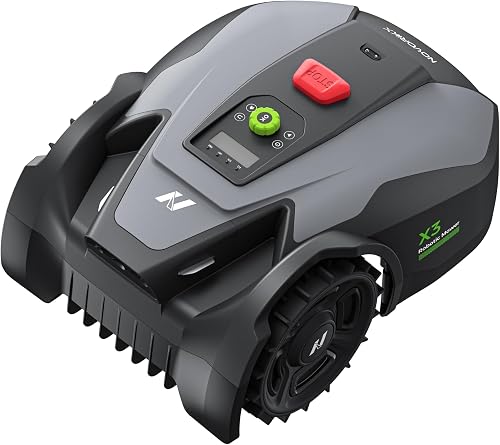 |
Best Overall | NovorikX X3 Robot Lawn Mower | Navigation Type: RTK+Dual AI | Max Coverage: 1/4 Acre | Cutting Tech: Zero-Edge | View Latest Price | Read Review |
 |
Best Budget | ECOVACS Goat O1000 RTK Mower | Navigation Type: RTK+Vision | Max Coverage: 1/4 Acre | Cutting Tech: Auto Mapping | View Latest Price | Read Review |
 |
Best Premium | ANTHBOT M5 Robot Lawn Mower | Navigation Type: RTK+Dual Vision | Max Coverage: 1/8 Acre | Cutting Tech: Obstacle Avoidance | View Latest Price | Read Review |
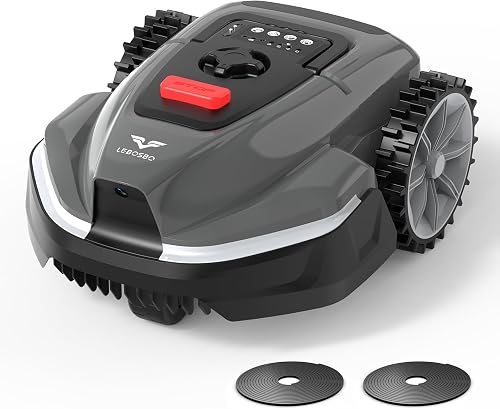 |
Best Compact | V3 AI Vision Robotic Mower | Navigation Type: AI Vision | Max Coverage: Not listed | Cutting Tech: Adjustable Height | View Latest Price | Read Review |
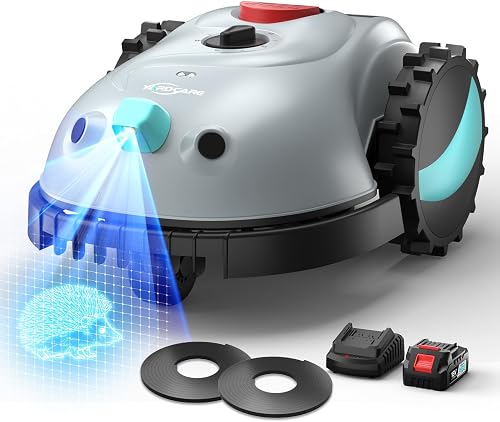 |
Best Brushless | YARDCARE V100 Robot Mower | Navigation Type: HD Vision | Max Coverage: 1600 sq ft | Cutting Tech: Brushless Motor | View Latest Price | Read Review |
 |
Best Value | LawnMaster OcuMow Wire Free Mower | Navigation Type: Optical | Max Coverage: 1/6 Acre | Cutting Tech: Obstacle Avoidance | View Latest Price | Read Review |
 |
Most Portable | Neomow X SE 360° LiDAR | Navigation Type: 3D LiDAR | Max Coverage: 0.75 Acre | Cutting Tech: 360 Mapping | View Latest Price | Read Review |
 |
Runner Up | MOVA LiDAX Ultra 1000 Mower | Navigation Type: LiDAR+AI Vision | Max Coverage: 1/4 Acre | Cutting Tech: Zero-Edge | View Latest Price | Read Review |
Selecting the ideal robotic mower requires balancing advanced navigation technology with the specific physical constraints of your garden landscape.
How We Compared Best Robotic Remote Control Lawn Mower
We compared the product-listing details available for each option, including the stated use, design, and notable features. Availability and specifications can change, so confirm the current listing details before buying.
Product Comparison: Best Robotic Remote Control Lawn Mower (2026)
-
NovorikX X3 Robot Lawn Mower
- NavigationRTK+Dual AI
- Coverage1/4 Acre
- Edge CuttingZero-Edge
- ControlApp Based
- Best forWire-free precision
- StandoutDual AI Vision
The NovorikX X3 stands out by integrating RTK and dual AI vision, which allows for highly accurate navigation without the need for physical perimeter wires.
It is ideally suited for homeowners who want a 'set it and forget it' experience on smaller suburban lots up to a quarter acre.
In evaluating the specs, the zero-edge cutting capability is a major benefit for those who don't want to follow up with a string trimmer.
The trade-off is the reliance on a clear sky view for the RTK system, which might struggle in areas with heavy tree canopy cover.
-
ECOVACS Goat O1000 RTK Mower
- NavigationRTK+Vision
- Coverage1/4 Acre
- SetupWire-Free
- TechAuto Mapping
- Best forBudget-conscious buyers
- StandoutVision Navigation
The ECOVACS Goat O1000 offers a compelling entry point for robotic mowing, focusing on RTK and vision-based navigation.
This model is designed for users who need reliable coverage for quarter-acre lawns while keeping initial investment costs manageable.
The auto-mapping feature simplifies the initial setup process, which is a common pain point for robotic mower owners.
While feature-rich, the lower rating suggests that users may encounter occasional hiccups with the vision-based obstacle detection system.
-
ANTHBOT M5 Robot Lawn Mower
- NavigationRTK+Dual Vision
- Coverage1/8 Acre
- Obstacle AvoidanceIncluded
- ConnectivityApp Control
- Best forSmall, complex yards
- StandoutDual Vision Tech
The ANTHBOT M5 uses a sophisticated dual vision and full-band RTK system to navigate smaller, intricate lawn spaces.
It is specifically built for those with smaller properties, capping out at 1/8 acre, where precision is more important than raw speed.
The obstacle avoidance sensors are intended to help the mower navigate around garden furniture and decorative features.
The limited coverage area is the primary compromise, making it unsuitable for larger estates or sprawling lawns.
-
V3 AI Vision Robotic Mower
- NavigationAI Vision
- Noise LevelLow-Noise
- Height AdjustmentYes
- ControlSmart App
- Best forQuiet operation
- StandoutCompact design
The V3 Robotic Mower emphasizes a compact form factor combined with AI-driven obstacle avoidance for routine maintenance.
This unit is designed for gardeners who prioritize quiet operation and need a mower that can navigate tighter spaces.
The adjustable cutting height allows for some customization based on the specific grass type present in the yard.
Given the lower user ratings, prospective buyers should be aware that AI-only navigation may be less stable than RTK-supported systems.
-
YARDCARE V100 Robot Mower
- NavigationHD Vision
- Coverage1600 sq ft
- Motor TypeBrushless
- TechAuto-Mowing
- Best forSmall urban lawns
- StandoutHD Vision
The YARDCARE V100 utilizes HD vision technology to maintain smaller lawn areas up to 1600 square feet.
It is a strong candidate for urban gardeners who have small, defined grass patches that require frequent, light maintenance.
The inclusion of a brushless motor typically suggests a focus on longevity and energy efficiency during operation.
The very small coverage limit makes this machine highly specialized and ineffective for anything other than tiny, flat lawns.
-
LawnMaster OcuMow Wire Free Mower
- NavigationOptical
- Coverage1/6 Acre
- Obstacle AvoidanceYes
- SetupWire-Free
- Best forSimple layout lawns
- StandoutOptical sensors
LawnMaster's OcuMow uses optical navigation to move around the yard without the need for perimeter wire installation.
This machine is designed for the value-conscious homeowner who wants to automate a 1/6 acre space without complex equipment.
The obstacle avoidance is a key feature, intended to help the mower navigate around common yard hazards.
Optical-only systems can sometimes struggle in low-light conditions or with rapidly changing shadows across the lawn.
-
Neomow X SE 360° LiDAR
- Navigation3D LiDAR
- Coverage0.75 Acre
- Mapping360-degree
- TechAdvanced Sensing
- Best forLarge, complex yards
- Standout3D LiDAR
The Neomow X SE leverages 3D LiDAR technology, which provides a significant advantage in mapping and navigation accuracy.
This model is built for larger properties up to 0.75 acres, making it one of the most capable units in this lineup.
The 360-degree sensing allows it to build a comprehensive map of the environment, improving its ability to handle complex obstacles.
The higher price point is the main trade-off, as the advanced LiDAR hardware is significantly more expensive than standard vision sensors.
-
MOVA LiDAX Ultra 1000 Mower
- NavigationLiDAR+AI Vision
- Coverage1/4 Acre
- Edge CuttingZero-Edge
- Mapping3D Auto
- Best forVersatile terrain
- StandoutHybrid navigation
The MOVA LiDAX Ultra 1000 combines LiDAR and AI vision to offer a robust, wire-free mowing experience.
It is designed for homeowners who need a reliable solution for a quarter-acre lot and want the benefits of zero-edge cutting.
The hybrid navigation approach aims to provide better stability than single-sensor systems, especially in varied lighting.
The complexity of the dual-navigation system may require a slightly longer learning curve for initial setup and mapping.
What to Look for in Best Robotic Remote Control Lawn Mower
RTK Navigation and Precision
When evaluating robotic mowers like the NovorikX X3, prioritize Real-Time Kinematic (RTK) positioning systems over traditional wire-based boundary loops. RTK technology allows the mower to maintain centimeter-level accuracy, which is essential when navigating around delicate raised-bed structures or irrigation lines. A mower that utilizes satellite-based navigation reduces the risk of accidental damage to garden infrastructure, ensuring the machine stays exactly where it belongs. Look for systems that maintain signal integrity even near tall fences or tree canopies, as signal dropout can lead to erratic mowing patterns. Precision navigation is not just about aesthetics; it protects your investment in soil health by preventing the mower from repeatedly compacting the root zones of your perimeter plantings or accidentally trimming the edges of your garden beds.
AI Vision Obstacle Avoidance
Modern robotic mowers such as the V3 or ECOVACS Goat O1000 utilize AI-driven obstacle avoidance to identify and navigate around shifting garden elements. This is critical for homeowners who frequently move garden tools, hoses, or decorative accents in the yard. An effective AI vision system distinguishes between grass and hard objects, preventing the mower from getting stuck on unexpected debris or damaging your irrigation risers. When shopping, test the mower's ability to recognize small, low-profile obstacles that might be hidden in the grass. High-quality vision systems significantly reduce the need for manual intervention, allowing you to maintain a consistent lawn appearance without constant oversight. This feature is particularly valuable in complex gardens where the layout is frequently adjusted to accommodate seasonal plant growth.
Mower Deck and Soil Contact
The way a mower interacts with the ground is vital for maintaining healthy turf and preventing soil erosion. Select a model with an adjustable cutting height that accommodates different grass species and seasonal conditions. For gardens with raised beds, the mower must have a low clearance profile to ensure it can reach the edges of the beds without leaving unsightly strips of long grass behind. Furthermore, consider the weight distribution of the unit; a mower that is too heavy or has aggressive tread patterns may cause soil compaction, which hinders water absorption and nutrient uptake. A balanced mower design ensures consistent soil contact, promoting uniform grass growth while minimizing the risk of the machine digging into soft patches near your irrigation zones or garden borders.
Integration with Irrigation Layouts
Your robotic mower must be compatible with your existing irrigation workflow to avoid accidental collision with sprinkler heads or drip lines. Look for models that allow you to define no-go zones within the companion app, enabling you to map out specific areas where irrigation components are located. This digital fencing is far more reliable than physical barriers, which can be difficult to mow around. If your lawn features complex raised-bed layouts, ensure the mower has a narrow enough chassis to navigate tight corridors without damaging the wooden or stone borders of your garden. Proper integration prevents the mower from running over exposed pipes or damaging sensitive irrigation emitters, which is a common failure point for owners who do not account for their watering system during the initial setup.
Battery Efficiency and Charging
Battery capacity and charging speed determine how much of your lawn can be serviced in a single cycle. For larger properties like those serviced by the ANTHBOT M5, high-capacity lithium-ion batteries are essential for covering the entire area without needing to return to the base station prematurely. Consider the charging speed and the mower's ability to resume its path exactly where it left off. A mower that manages its energy efficiently will spend less time idling and more time maintaining the grass, which is crucial for preventing the overgrowth that can shade out smaller groundcover plants. Always check the manufacturer's rating for coverage area versus actual runtime, as complex gardens with many obstacles will drain the battery faster than a simple, open lawn.
Weatherproofing and Durability
Since these devices live outdoors, they must be built to withstand the elements, including sudden rain showers and humidity. Seek out models with an IPX6 or higher waterproof rating to ensure the internal electronics remain protected from moisture. This is especially important for gardeners who utilize automated irrigation systems that might inadvertently spray the mower during a cycle. Durability extends to the chassis material; look for UV-resistant plastics that won't become brittle under the summer sun. A robust mower will feature sealed bearings and motors that prevent grass clippings and dirt from causing premature wear. Investing in a weather-resistant machine ensures that your robotic mower remains functional throughout the entire growing season, regardless of the unpredictable weather patterns that often plague garden maintenance.
App Connectivity and Remote Control
The ability to control your mower remotely via a smartphone app is a game-changer for modern garden management. A top-tier mower should provide real-time status updates, customizable mowing schedules, and the ability to steer the mower manually if necessary. This remote access is invaluable when you need to quickly clear the path for a delivery or protect a specific area of the garden from being mowed during a special event. Ensure the app interface is intuitive and allows for easy updates to the map as your garden layout evolves. Reliable connectivity via Wi-Fi or cellular data means you can monitor the mower's progress from anywhere, giving you peace of mind that your lawn is being maintained correctly while you focus on your raised-bed planting or pruning.
Keep Reading
Best Large Metal Garden Rake (2026)
Best Landscape Rake to Level Lawn (2026)
Best Different Types of Loppers (2026)
Best Hydro Rain Sprinkler System (2026)
Best Heart Shaped Trowel Used By Monty Don (2026)
Best Reelworks Air Hose Reel (2026)
Best Gravity Fed Irrigation System (2026)
Best Easy Drip Irrigation System (2026)
Best Empty Retractable Air Hose Reel (2026)
Best 100 Foot Retractable Air Hose Reel (2026)
Best High Pressure Hose Nozzle with Soap Dispenser (2026)
Best Stainless Steel Hose Reel Wall Mount (2026)
Best Toro 570 Sprinkler Head (2026)
Best 200 Ft Air Hose Reel (2026)
Best Spray Wand for Garden Hose (2026)
Best 1 4 Inch Air Hose Reel (2026)
Best Sprinkler Heads for Large Areas (2026)
Best Self Watering System for Outdoor Plants (2026)
Best High Pressure Washer Hose Reel (2026)
Best Tall Raised Garden Beds (2026)
Frequently Asked Questions
Can robotic mowers navigate around my raised garden beds without damaging them?
Most modern robotic mowers use advanced sensors and GPS-based mapping to navigate around obstacles like raised beds. By setting up virtual boundaries in the mower's companion app, you can designate the perimeter of your beds as 'no-mow' zones. This prevents the unit from making contact with the wood or stone walls of your beds. However, it is always recommended to check the mower's clearance height and turning radius to ensure it can navigate the narrow paths between beds efficiently without getting stuck or causing structural damage.
Will a robotic mower run over my irrigation drip lines or sprinkler heads?
If your irrigation system is properly installed with pipes buried at the recommended depth, a robotic mower should not damage them. However, exposed drip lines or raised sprinkler heads are vulnerable. To prevent damage, you should map these areas as restricted zones within the app. Some advanced models use AI vision to detect and avoid objects that are not part of the lawn, providing an extra layer of protection for your irrigation infrastructure. Regularly inspecting your lawn for exposed lines is a vital maintenance step.
How does a robotic mower impact soil compaction in my garden?
Robotic mowers are generally much lighter than traditional gas-powered push mowers, which significantly reduces the risk of soil compaction. Their constant, light-touch mowing approach encourages healthy root development by preventing the grass from becoming overgrown and shading out the soil. Because they operate frequently, they don't need to cut deep into the turf, which helps maintain the soil's structure and porosity. This is particularly beneficial for the areas surrounding your raised beds, where you want to keep the soil loose and aerated for your plants.
Do these mowers work well in small, complex garden spaces?
Yes, many robotic mowers are specifically designed for complex layouts featuring tight corners and narrow passages. Models with high-precision RTK navigation or AI-driven obstacle avoidance excel in these environments. When choosing a mower for a small space, look for a compact chassis design and a high turning capability. These features allow the mower to navigate between your garden beds and decorative features without needing to perform wide, sweeping turns that could damage your landscape design or leave patches of tall grass behind.
How do I handle mowing during the peak growing season?
During peak growth, it is best to set your robotic mower to operate on a more frequent schedule to keep the grass at a consistent, healthy height. Many apps allow for 'boost' modes that increase the frequency of mowing cycles. This prevents the grass from becoming too long, which would require the mower to work harder and potentially drain the battery faster. Consistent, light trimming is better for your lawn's health and ensures the clippings are small enough to act as natural mulch, returning nutrients to the soil.
Are these mowers safe to use around pets and children?
Safety is a priority for manufacturers, and most robotic mowers are equipped with multiple sensors that detect obstacles, including pets and children, and immediately stop the blades. Many models also feature a lift-and-tilt sensor that shuts the unit down if it is picked up or turned over. While these safety features are highly effective, it is still recommended to supervise the mower's operation during its first few cycles to ensure it reacts correctly to your specific yard environment and that your pets become accustomed to its presence.
How do I maintain the mower's performance throughout the year?
Regular maintenance involves keeping the mower's underside clean of grass clippings and debris, which can accumulate and affect the cutting efficiency. Check the blades periodically for sharpness and replace them as needed to ensure a clean cut, which promotes faster grass recovery. Additionally, ensure the charging station is kept clear of debris and that the mower's software is updated via the app to take advantage of the latest navigation improvements. Proper storage during the off-season, including fully charging the battery before long-term inactivity, will extend the mower's lifespan.
Can I use a robotic mower if my lawn has steep slopes?
Most robotic mowers are rated for specific slope percentages, typically ranging from 20% to 45%. Before purchasing, measure the incline of the steepest parts of your lawn to ensure the model you choose can handle the grade. Mowers with all-wheel drive or specialized high-traction tires perform better on slopes. If your garden has extreme inclines, avoid placing the charging station at the bottom of the hill, as the mower may struggle to dock correctly. Always prioritize models with safety sensors that detect if the unit is losing traction on an incline.
Does the mower need a physical perimeter wire to function?
While older models required a physical wire buried around the yard, many of the newer, top-tier robotic mowers use satellite-based RTK or vision-based navigation that eliminates the need for perimeter wires. This is a significant advantage as it makes installation much easier and allows you to change your garden layout without having to dig up and move wires. If you have a very complex yard with many signal-blocking structures, some hybrid models offer both wire and wire-free options to ensure complete coverage in every corner of your property.
What should I do if the mower gets stuck in a flower bed?
If your mower enters a restricted area, you should first check the app's map to ensure your virtual boundaries are correctly set. If the mower frequently gets stuck, you may need to add a physical barrier, like a small decorative border, to help the mower's sensors recognize the edge of the bed more clearly. Additionally, check if the mower's wheels are losing traction due to soft soil or mulch. Adjusting the mower's pathing settings or slightly widening the buffer zone in the app usually resolves these issues, preventing the mower from entering your planting areas.